[This vital report on the true nature of the Zionist occupation of Palestine has been deleted from this site 3 times…here it is again..ed.]
The Koenig Memorandum
1 March 1976
This memorandum, proposing changes in Israeli policy toward the Arabs in Israel, was written by Israel Koenig, the Northern District (Galilee) Commissioner of the Ministry of the Interior, and reportedly submitted to Prime Minister Yitzhaq Rabin as a secret document. Signed four weeks before “Land Day” (the general strike and demonstrations organized by the Palestinians in Israel on 30 March), the document is complemented by a secondary report including the lessons drawn by Koenig soon after the event. Al Hamishmar, a daily newspaper affiliated with the MAPAM party, published the two parts of the document on 7 September 1976.
TOP SECRET: MEMORANDUM – PROPOSAL
HANDLING THE ARABS OF ISRAEL
PROPOSAL NO. 1
GENERAL:
1. Until a very short while ago it was accepted by those dealing with this part of Israel’s population that it had fully come to terms with the establishment of the State of Israel and that most of this [Arab] population had a high degree of identification with the state and had been drawn into its various frameworks. This, at least, was expressed by those who handle them, and by those close to the social centers of Arab residents and citizens of the state.
2. Recently, certain phenomena have occurred which have challenged these assumptions and which have seriously questioned the loyalty of a large part of them to the state and to its very existence.
Even though doubts about the ideas and ways of dealing with the Israeli Arabs have been expressed over the years for reasons that will be mentioned below, these were opposed to the accepted conception of the Arabists and rejected outright. It appears to us that it can no longer be disputed that there is room to discuss these “preconceptions” which have, until recently, served as guiding principles.
3. With the establishment of the state, the remnants of the Arab population in the country were left without a leadership. A minority was created which had to adapt itself to the reality of a Jewish state waging a war against its neighboring countries and proving its strength against them.
The military government, under whose aegis this population was placed, established the rule of “notables” and thus entered into the framework of Arab society which was built on family clans. The abolition of the military government caused the undermining of the authority of the “notables” and those whom they represented. The undermining of the individual’s dependence on the establishment -the military government–enabled the younger generation to feel the power that had come into its hands in a democratic society, and this also because of the passage of Arab society from an agricultural society to an industrial one with all the social implications of this.
Moreover, the “revolt” of the younger generation frequently forced the older generation to join the camp of the rebels and exposed the state as a target for their struggle, since the tools to insure their dependence on Jewish society had not been prepared. Moreover, we encouraged the letting off of steam by attempts to bring the rebels to our side by various “means.”
In the fifties, the Arab society was dependent from an economic point of view on the Jewish economy which had, in the course of time, been opened to the Arabs as a result of Jewish manual laborers having left it. This situation has created an affluent economic stratum, on which to a large extent, the economy of the country and its well being are dependent.
4. With the abolition of the military government the country put the affairs of the Arab population into the hands of those who spoke Arabic and who pulled out the violent elements and made them leaders while founding their status on their ability to obtain benefits for themselves and their families. This they did while ignoring the social problems in the Arab sector on the one hand, and lacking a long-term plan for the creation of an identity of a loyal Arab citizen on the other.
Those dealing with the Arab sector at all levels, political, military, police and civilian–their test was to familiarize themselves with the Arab mentality. Their thinking and practical ability was not always greater than that of the people with whom they were dealing, and dealing with their interests instead of maintaining their independent thinking and analytical abilities is a phenomenon that causes concern on the one hand, as opposed to the attempt to deal with this from the point of view of objective thought that insures the long- term Jewish national interests on the other hand .
5. In the northern district are concentrated most Israeli Arabs, whose sincerity and involvement among the Jewish population manifestly and prominently put into focus the problems that have already been created and the expectations in the near and distant future. One of the most worrying phenomena is the loss of patience of the average Jew toward the Arab citizen, and in certain cases a hostility can be felt, and any provocation might cause an uncontrollable explosion on both sides whose results might have negative consequences in Israel and especially abroad .
(See the decision of the student organization in Haifa not to perform guard duty because of the possibility given to Arab students to pay a guard fee.)
This catalyst containing powerful emotional residues among the Jewish population upsets the demographic balance in these areas, and this can be felt by and is a source of fear to each individual.
In the framework of this memorandum we will point to certain critical issues establishing the background, and, in conclusion, recommendations to solve the problems.
The problems to be discussed are:
a) The demographic problem and the manifestations of Arab nationalism.
b) The Arab leadership and its implications.
c) Economy and employment.
d) Education.
e) Implementing the law.
A. THE DEMOGRAPHIC PROBLEM AND THE MANIFESTATIONS OF ARAB NATIONALISM
1. The natural increase of the Arab population in Israel is 5.9 percent annually against a natural increase of 1.5 percent annually among the Jewish population.
This problem is particularly acute in the northern district where there is a large Arab population. In mid-1975 the Arab population of the northern district was 250,000 while the Jewish population was 289,000. A regional examination shows that in western Galilee the Arab population constitutes 67 percent of the total; in the region of Yizre’el the Arab population constitutes 48 percent of the total population . In 1974 only 759 Jews were added to the population of the northern district while the Arab population increased by 9,035. According to this rate of increase, by 1978 Arabs will constitute over 51 percent of the total population of that district.
The nationalists feel–as I do in regard to the Arab population-that the Arabs’ increase in the Galilee will endanger our control of that area and will create possibilities for military forces from the north to infiltrate into that area in proportion to the acceleration of the nationalistic process among Israeli Arabs and their willingness to help.
2. The Israeli Arab population has received a nationalistic momentum since the six -day war. The policy of free contact with the West Bank and the open bridges has renewed the contact between the Arabs of Judaea and Samaria and the Palestinians east of the Jordan River, and this has created the basis for a show of determination and slogans for a nationalist struggle in Israel. This process, which was inevitable, gained momentum after the Yom Kippur war and was further strengthened after the international political events which were manifested in the recognition of the PLO as the standard bearer of the struggle in regard to the Palestinian problem.
Recently there has been mention of the UN resolution about Israel’s borders in 1947 according to which significant parts of this piece of land are not to be included in the State of Israel.
The Israeli Arab is no longer passive and has gone over to nationalistic manifestations–only verbal at this stage–which have seen light in a number of events, the most striking of which were:
a) Events during the prime minister’s visit to Nazareth a year ago.
b) The shouting of slogans of solidarity with the PLO during student demonstrations and on other occasions.
c) The position of Arab students in the universities on the issue of guard duty.
d) The nationalistic manifestations in the voting in the Nazareth municipal elections on December 9, 1975.
e) The devious and unexpected call up of the inhabitants of Nazareth to help the municipality pay off pressing debts, which at that stage eased RAKAH’s burden on running the town.
f) A protest rally in Sakhnin on February 14, 1975 in which the head of Tamra’s local council announced that Israel should fear the Israeli Arabs more than it does the Arabs beyond its borders.
g) Decisions made at a convention in Nazareth on Saturday, March 6, 1976:
1) Declaration of a day’s strike by the whole Arab population in Israel called “the Day of the Land strike.”
2) A call to the Arab population not to cling to passive protests alone but to “protest by way of struggle until the bitter end…”
3) A hunger strike in front of the UN buildings, following the example of the protest on behalf of Russian Zionists.
4) “The government is residing in a glass house and we will be the first to hurl a stone and smash it.”
5) A statement by local council head Mi’ilya (Massad Qassis), who is considered a “positive” man, and who is a former MK from a list linked to the Alignment: “…What moral right has the government to carry out expropriations in this region which, according to the 1947 UN resolution concerning the partition of Eretz Yisra’el is not included in Eretz Yisra’el?”
This is a relatively new phenomenon and reflects the wish of a clear majority of these people to demonstrate against the establishment and the Israeli authorities even within the confines of a “pocket”–a very serious development in view of their past behavior.
The era of international victories by the Palestinians and the achievements of the nationalists in Israel point to a process of open confrontation with the Arab problem in Israel, a process which will grow as long as RAKAH carries the resistance to the establishment exclusively. (It must be remembered that “Israel” is not RAKAH’s major concern and this is not accidental.)
3. Forecast
a) The increase of the Arab population (from 150,000 in 1948 to over 430,000 in 1975) gives the Arab nationalists a feeling of power and a hope that time is working for them. This is especially true in an area like northern Israel where the physical Arab presence in contiguous areas represents a checking obstacle.
b) The usurping by RAKAH of “quasigovernmental” institutions, such as the local councils, creates a legitimate basis for a political nationalistic activity, both overt and clandestine, adopting methods that were in use by the Jewish community in the “pre-state era,” as well as worldwide communist methods. Actually, at this time there already exists a number of local councils completely controlled by RAKAH, and in our view, due to premeditated decisions. They are at this time not yet being exploited for the above-mentioned aims, but this is only due to a lack of sufficient executive cadres and the lack of necessary organizational facilities. In fact, the number of students in Eastern Europe from northern villages aided by RAKAH stipends is gradually increasing in our view, for the purpose of creating such cadres.
c) There is ground for serious apprehensions that within the next decade an Arab political and demographic takeover of the Acre and Nazareth areas will occur.
d) It must be taken into account that at one of the stages of the hostile political activities a demand of some kind will be raised to hold a referendum in northern Israel where the Arab population is in the majority.
This activity will be guided from outside, but its perpetrators are likely to be nationalistic leftists from among the local populace.
e) At some state a planned provocation by RAKAH and/ or by nationalists is possible in order to induce an outbreak of disturbances by uncontrolled Jewish elements–a situation likely to have the issue of Israeli Arabs raised at international forums, and concurrently, to maneuver the moderate Israeli Arab elements into a situation which forces them to identify themselves with extreme steps within Israel and outside it.
f) There are indications of an organized activity in the purchase of real estate by Arabs in the north. This activity is prominent in Upper Nazareth and in Acre, and is also causing concern in the Yisra’el Valley.
4. Suggestions
a) Expand and deepen Jewish settlement in areas where the contiguity of the Arab population is prominent, and where they number considerably more than the Jewish population ; examine the possibility of diluting existing Arab population concentrations.
Special attention must be paid to border areas in the country’s northwest and to the Nazareth region. The approach and exigency of performance have to deviate from the routine that has been adopted so far. Concurrently, the state law has to be enforced so as to limit “breaking of new ground” by Arab settlements in various areas of the country.
b) At the same time, a strong and solid Jewish leadership should be fostered in Upper Nazareth and in Acre capable of facing the expected crucial developments.
c) Introduce a policy of reward and punishment (within the framework of the law) for leaders and settlements that express hostility in any way toward the state and Zionism.
d) To deny RAKAH its “priority” in carrying out a national struggle and representing Israeli Arabs and to provide a valve for communities still sitting on the “fence,” a sister Labor Party should be established in which the stress will be on ideas of equality, humanism and language, social struggle and on raising the banner of peace in the region. The establishment has to prepare itself to maintain covert presence and control in that party.
e) Invest every possible effort in bringing all Zionist parties toward a national consensus regarding the issue of Israel’s Arabs in order to disentangle them from their internal political squabbles.
B. THE ARAB LEADERSHIP AND ITS IMPLI CATIONS
1. The Jewish democratic and open society, which swallowed the Arab population remaining in the country after the establishment of the state, failed to absorb it as far as its way of thinking, its manners and its vulnerability are concerned. The Jews appointed to take care of this population , and whose aim had been to make them loyal to the Jewish society in its state, failed to do so. On the contrary, there are clear indications that everything was done to maintain that population ‘s singularity and isolation on the one hand , and to receive selective attention and preferred favoritism on the other hand.
At the same time, however, time and again they made proclamations about equality, integration and so forth… though the actions were contradictory. This policy did not take into consideration the superficial and Levantinistic Arab character whose imagination tends to exceed rationality.
The extreme and keen manifestation of this double standard and contradictory policy of the “enthronement” of public representatives and leaders. Up to this very day there is not a single elected major Arab public figure above the local level.
The Arab society in Israel is in the throes of the transition from an agricultural and institutionalized society of long standing into an industrial society, a transition involving the breakup of family, religious and social frameworks, to which the dimension of national strife has been added.
This strife is serious and confronts every individual with decisions that are often crucial. The transitory society is in these stages in need of leaders who can provide personal examples and who are capable of giving appropriate answers to sincere nationalists, leading them toward a reason able personal and public solution.
However, as has been mentioned in the preamble, this had not been the test for receiving the title of “leader.” The bully, the bigmouth and not always the honest, have become the representatives and standard bearers of Israeli Arabs.
2. The second generation which has grown up in Israeli society and which is trying to adapt, and not just superficially, to Israeli customs, has not been able to produce the proper leaders. Signs of this could be seen 10 years ago. Those responsible for these issues had to create leaders who were acceptable to this generation and, at the same time, loyal to the state. In our opinion, both if this omission was a result of no other choice or if it was premeditated, the results of it might be disastrous. One of the main catalysts of today’s decline is the disgust with this leadership (see the Nazareth municipal elections).
3. Forecast:
a) The struggle between those who hold the various positions and the rebellious generation will get worse with the former falling back on the governmental, Histadrut and party establishment.
b) The result will be that the struggle for control will become a struggle against the establishment and the state with the majority consistently going over to the side of the rebels.
c) The elements hostile to the country will take full advantage of this social crisis. They will adopt this as their struggle and the echoes will be taken advantage of in various forums in this country and abroad as a social and national struggle.
d) We believe that if the decline continues at the present rate, RAKAH might win 10 seats in the coming Knesset elections.
4. Suggestions:
a) We would act courageously and replace all the people who deal with the Arab sector on behalf of government institutions, the police and the parties, including policymakers.
b) We should disassociate ourselves from the present Arab “leadership” which does not represent the Arab population and stress the establishment’s non-solidarity with them.
c) Those who will be given the job of performing this mission should start immediately to create new figures of high intellectual standard, figures who are equitable and charismatic. They should be helped to establish an Arab party as mentioned above.
d) Special team should be appointed to examine the personal habits of RAKAH leaders and other negative people and this information should be made available to the electorate.
e) Steps should be taken against all negative personalities at all levels and in all institutions.
C. ECONOMY AND EMPLOYMENT
1. The development and economic improvement of the country’s population over the years of its existence did not reach the Arab population. Moreover, this lack of improvement is strongly felt among this population because it was the poor who remained within the borders after the fighting of 1948-1949.
This great gap between supply and demand for labor in all spheres of the market and especially in building, mechanics and general manual labor, and the dependence on this labor that has been created in many spheres of the economy have given a feeling of power to Israeli Arabs which has been taken advantage of by interested hostile elements.
2. The manual aid that is customary among members of a family and the lack of awareness about creative investment on a large scale have left very large sums of cash in the hands of the Arab population. This capital is hidden from the various tax authorities. It should be stressed that while the Arab population in Israel constitutes 14 percent of the total, and there is no “uprooting” of labor as a result of 3 years of army service among that population, it pays only 1.5 percent of the taxes. In this way its economic future is decisively insured. Also, the age composition (half of the population is young and working) is of great significance: it means a high income for all families. To this should be added state grants (national insurance to families with more than two children, which is 95 percent of the Arab families in Israel).
3. A significant issue in the northern district, because of the large concentration of Arabs there, is that projects which are being established with huge investments with the aim of increasing the Jewish population are employing Arab workers on a scale of 25 to 50 percent.
This social and economic security that relieves the individual and the family of economic worries and day-to-day pressures, grants them, consciously and subconsciously, leisure for “social-nationalist” thought which is taken advantage of by hostile elements for various forms of incitement, a sense of power and the possibility of public protest.
4. Forecast:
a) The concentration of mainly black capital in undesirable hands, estimated to be several hundred of millions of pounds, in addition to the economic damage that might be caused by this, could serve as a basis for donations which, in the future, might be put at the disposal of hostile elements (the collection of payments by the Nazareth municipality has already been mentioned).
b) The increase of Arab workers in factories might accelerate the friction between Jews and Arabs and develop into uncontrolled incidents. Moreover, there is a possibility of RAKAH taking over the worker committees.
c) By having significant control over various spheres of the economy there is the possibility of striking or of noncooperation and thus causing serious damage to the economy and to the state, and especially political damage by emphasizing their strength as factor in the country’s economy.
d) Increasing difficulties in absorbing Jewish workers, especially in the north where we have a special interest in increasing the Jewish population.
5. Suggestions:
a) Appropriate arrangements have to be made with the management of a concern bearing the “approved investment” label in crucial areas (as noted above). The number of Arab employees should not exceed 20 percent.
b) The tax authorities must adopt immediate steps to intensify tax collection, performing it with firmness and without deviations.
c) Reach a settlement with central marketing factors of various consumer goods that would neutralize and encumber Arab agents, particularly in the northern areas, in order to avoid dependence of the Jewish population on those agents, especially in times of emergency.
d) The government must find a way to neutralize the payment of “big family” grants to the Arab population, either by linking them to the economic situation or by taking this responsibility from the national insurance system and transferring it to the Jewish Agency or to the Zionist organization so that the grant is paid to Jews only.
e) Endeavor to have central institutions pay more attention in giving preferential treatment to Jewish groups or individuals rather than to Arabs.
D. EDUCATION
1. The most important and crucial change in the conceptual and behavioral structure of the Arab population is a result of the broadened and expanding educational system available to that population.
The improved economic situation and the social security of the individual and of the family have encouraged a large number of pupils to attend high school and institutions of higher learning. This process aided in the introduction of graded tuition fees–66 per cent in high schools. Financial aid and the policy of scholarships to university students established the fact that a populace with education, and be it ever so superficial and provincial, provides the “jet sets” for every nationalistic movement, particularly in the given circumstances of the Israeli Arabs, and this is indeed the situation, namely, the incidents at the universities. People in charge of that sector should have foreseen such contingencies, and it is imperative that from now on the coordination of the various frameworks as well as the activities adopted toward the population of all kinds of graduates be meticulously planned.
2. The establishment of preferential criteria (low grades) for the acceptance of Arab pupils into various colleges and into the department to which they used to be directed (humanities, political and social sciences), as well as the absence of care and the inability to provide full employment to graduates, created a large population of frustrated “intelligentsia” forced by a profound mental need to seek relief. Expressions of this are directed against the Israeli establishment of the state.
The scope of the problem is particularly serious when we take into consideration that the number of graduates is more than 5,700 and that today about 2,500 students are in high schools.
3. Forecast:
a) Because of the objective difficulty of recognizing the professional inferiority, the feeling of frustration will increase gradually, and the total number will become bigger at an ever-increasing rate.
b) By virtue of its Levantine character and due to social dynamics, this society will move from introversion to external manifestations and a possible move into organized violence is not to be ruled out. The first blossoms already exist.
c) The raising of the banner of the social and nationalistic struggle and overt identification with the PLO and even more extremist organizations.
d) Reasonable prospects for the success of a number of leaders by virtue of their being sons of the local progressive society out of which they grew. No doubt some of them will be endowed with leadership qualities.
e) One shouldn’t ignore the difficulties that will be caused to the government when handling them in crucial times, because of their personal standards.
4. Suggestions:
a) The reception criteria for Arab university students should be the same as for Jewish students and this must also apply to the granting of scholarships.
A meticulous implementation of these rules will produce a natural selection and will considerably reduce the number of Arab students. Accordingly, the number of low standard graduates will also decrease, a fact that will facilitate their absorption in work after their studies.
b) Encourage the channeling of students into technical professions, to physical and natural sciences. These studies leave less time for dabbling in nationalism and the dropout rate is higher.
c) Make trips abroad for studies easier, while making the return and employment more difficult-this policy is apt to encourage their emigration.
d) Adopt tough measures at all levels against various agitators among college and university students.
e) Prepare absorption possibilities in advance for the better part of the graduates, according to their qualifications. This policy can be implemented thanks to the time available (a number of years) in which the authorities may plan their steps.
E. LAW ENFORCEMENT
1. Implementation of the law and its enforcement by the authorities expresses the public interest of society in preference to individual interest. In the subject in question, the diligent maintenance of internal security with everything that this implies is of paramount importance to the nation and to Jews at large.
Law enforcement in a country with a developing society like that of Israel is a problem to be solved with flexibility, care and much wisdom. At the same time, how ever, the administrative and executive authority in the Arab sector must be aware of the existence of the law and its enforcement, so as to avoid erosion.
We have already mentioned some ways in which this population was treated and the double standards that were characteristic in those procedures. There exists an awareness among the Arab population, based on facts, that the law in this state can be circumvented by good connections with the proper people. In addition to the general public damage these procedures are causing, Israeli Arabs see in this the first signs of weakness in the administration which, following further pressures, will make possible additional concessions (examples for this abound).
2. It is difficult to get a reasonable explanation for the low percentage of taxes collected from the Arab population, in comparison to what is collected from the Jewish population. Non-enforcement of the law is likely to cause grievous harm to the internal security in extensive areas in the north and center of the country
One has to remember and to learn from the experience of other states with national minority populations that exaggerated and uncontrolled liberalism does not achieve the intended end, but rather the opposite. And this rule applies particularly to the specific Arab minority in Israel (as has been elaborated upon above).
3. Forecast:
a) In a law-abiding society overt disobedience of law generates a dynamics of its transgressions, a situation later necessitating many efforts to remedy it.
b) The possibility must be considered that in the future many Jews may support, for various reasons and motives, a population violating the law, and denounce the administration as “suppressor” if it attempts to enforce the law.
c) One cannot ignore the percent of the Arab population–14 percent–in which the violation of the law may assume a “revolutionary” quality.
d) Hostile elements inside the country and abroad are apt to exploit the implementation of laws, whose enforcement the authorities avoided for a long time, claiming they represent national suppression, and so forth.
4. Suggestions:
a) Make clear to everyone dealing with the Arab sector that violation of the law must not be ignored, and that its literal implementation should be carried out firmly.
b) Adopt legal steps against civil servants and institutions not fulfilling their duty in the enforcement of what the law prescribes.
c) Introduce law suits and put into effect a number of court sentences, particularly in the sphere of income tax and illegal building, which will deter the population from any thought about an escape from the hands of the law.
d) Increase the presence of various police and security forces in the Arab streets to deter extremist circles and those who are “sitting on the fence” and are likely to be drawn into uprisings and demonstrations.
[Signed: March 1, 1976]
PROPOSAL NO. 2
1. Following my previous memorandum and in the light of the March 30 developments and incidents [Day of the Land Strike] , it is desirable to analyze and assess these incidents and to draw up forecasts for possible new developments in the near future, and a number of suggestions to be implemented soon.
The full success of the strike in the Arab sector is a fact that ought to be carefully studied and accepted as a starting point for every discussion of the subject.
There are several factors which contributed to the success of the strike and to its scope which deserve to be studied:
a) There is no way to examine the percentage or the number of Arabs who did not come to work in places outside their residences, but in villages and in the two cities in which the Arab population is concentrated, the strike was complete and total.
b) Control by the strike organizers over all kinds of educational institutions in the Arab sector including church schools insured that the strike was complete.
c) The persuasion campaign about the necessity of the strike was begun by “official” factors, local council chairmen and public figures who are usually described as moderate and cooperative with the Israeli establishment. It must be assumed that these circles went into action after having lived under the impression that high-ranking elements were backing them and that an “interference” by the Arab populace would persuade the government to withdraw the expropriation. In this activity they competed with each other in extremist expressions, assuming that the achievement would be attributed to the loudest.
d) At a very late stage, realizing their mistake, the official Arab leadership–that is the local council chairmen and others–found they could no longer retreat. The erosion they had caused was sweeping them along too. The Jewish stopgap attempts did not prevent the strike and caused estrangement and a rift between the Arab population and its elected representatives although the strike and the incidents accompanying it did occur.
e) The strike organizers conducted a tough, threatening campaign, using violence against strikebreakers which proved effective. Pledges by the administration that every strikebreaker would be protected lacked credibility and t he population did not take them seriously.
2. Despite the fact that the strike and all the preparations and events that accompanied it was planned and executed by RAKAH , the party decided not to be very conspicuous in this matter in order to assume, in practice, the leadership of all the nationalities and to be the vanguard of all Arab nationalist activity among Israel’s Arabs in the future.
It is necessary to pay attention to this process and to study its motives and components:
a) The PLO movement, that is the national liberation movement for the Palestinian Arabs does not call for achieving social aims. With the exception of a small and secondary section-George Habash’s group– there is not a single group that seriously deals with such matters or propagates them.
b) Sending people who do not belong to any party into an open and violent confrontation with the security forces, causing maximum casualties among the people in an attempt to create feelings of hatred and vengeance among them and tension on the part of the government toward the hostile population.
c) A classic move that is usually the vogue with the liberation movements in Asia and Africa is the linking of the national and the social struggles in a way that helps to mobilize the masses for the sake of the struggle and to obtain sympathetic world public opinion. It is clear that some countries and powers that have a certain orientation find themselves involved , if only for propaganda purposes, in every struggle that is carried out under these slogans.
In view of what has been said before, it is necessary to treat very seriously the aforementioned moves and the phenomena that are liable to stem from the creation of such an identification in world opinion and among the Arab population. Moreover , it is my belief that RAKAH has used these moves mainly under the guise of nationalism.
3. There have been a number of impressive achievements for Arab nationalism led by RAKAH as the result of the strike day [Day of the Land ] , both the disturbances that took place prior to the strike day and those that took place on the day of the strike:
a) For the first time since the establishment of the State of Israel , a situation has been created where the Arab population has identified itself openly and cognizantly–contrary to the government’s request–with an Arab extremist-nationalist demand and has displayed a psychological readiness to achieve it . Moreover, most parts of the Arab population justified and still justify those who rioted and attacked the defense forces, and they talk openly about their identification with them.
b) A large number of local authorities and their leaders were used as the means and tools to develop and lead the struggle. Those local council heads who, as a result of pressures, did not join the extremists in the last phase did not declare their objection to the strike, but requested its postponement in order to use it as a threat to apply pressure against the government in a bid to make it surrender to their demands.
c) The nationalists and RAKAH succeeded in agitating and embroiling the’· masses in a violent struggle with the defense forces–a confrontation that has left its deep and serious marks for a long time to come. The fact that despite the sentiments that gripped the masses the organizers succeeded in extricating their men from the violent struggle and insuring their physical safety, and saved them from being arrested after the riots, proves the precision of the planning of the operations.
d) The open and violent acts with all the sorry results that they brought upon the population have infused them with pride and straightened their backs. They are proud of their courage to confront the official forces of the state. It should not be forgotten that such a feeling in a population like that of the Israeli Arabs, and in the atmosphere in which they live, holds many possibilities for professional agitators whose aim would be to restore “the straight back of the humiliated Arab,” to the Israeli Arabs.
e) The political power of Arab national ism that is used by RAKAH for its own future political struggle becomes evident.
f) The strike and the violent actions that accompanied it pushed aside that part of the official Arab establishment (the elected) and the heads of the local councils who did not participate in the strike or had proposed postponing it to a marginal position. The strike took place contrary to the Shefar’am meeting. In this way, the active part of the Arab population, especially the young, were left for RAKAH and its nationalist agitators.
It is perhaps worth asking here whether it was politically wise, in the long run, to apply pressure on the heads of the local councils in the Shefar’am meeting for them to act as they did. The subject should be discussed and suitable conclusions should be reached. The absolute unity of the Arab population that was attained on the “Day of the Land” and the deep rift created between the Arab and Jewish sectors was a historic achievement for the organizers. This rift had and will have in the future grave expressions in the Arab and Jewish populations alike. Needless to say, it will be well exploited by a hostile factor.
g) A significant impression was felt in plants and services as a result of the strike by proving the dependence of the smooth operation of the economy on Arab hands. Parallel to that, dependency of the Jewish-run economy on them has been proven to the Arab population. Even this is exploited, and will be in the future, for the sake of feeding the “Arab back-straightening” which the Arabs of Israel must exploit.
4. Forecast:
a) The conditions created on “Day of the Land” and afterwards provide RAKAH and the nationalists with many opportunities to incite disturbances in the country and to create communal tension and anxiety. It appears that we may witness here a recurrence of the same tactics and slogans used to inflame the masses and turn them loose on the streets whenever the leading elements decided to so do.
b) The campaign of intimidation will be intensified to the point of threatening Arabs who cooperate with the government or committing violence against them in order to quell any resistance and silence moderate voices.
c) Following the repercussions in the Arab streets in the wake of the recent clashes, the masses will be called into the streets for a specific purpose: to clash with the security forces and to increase as much as possible the number of Arab citizens injured so as to arouse ambitions of revenge within the Arab population against the security forces and to create reaction in the world about the tension in Israel and the suppressing of the Arab population by the Israeli occupying power.
d) Such clashes would increase the Israeli Arabs’ identification with the injured and the means would be created to penetrate into those circles which are still hesitant about joining the struggle.
Such action would, generally speaking, cause the atmosphere to become more extreme and to deteriorate further. The theory adopted by those circles is that the present situation is bad for the Israeli Arabs and that only in a situation of general disruption in the state would they have an opportunity for change; in the long run–perhaps in the foreseeable future–this would cause Israel to disintegrate from within and would bring about the Palestinization of the state.
e) It is quite probable that the PLO or some of its components would analyze these extreme acts, although the operations in the field would be carried out by RAKAH–while its functionaries remain behind the scenes but pull the strings. Most of the burden of absorbing such activity will be placed on the Arab nationalists from the population in Israel, and mainly from among the intelligentsia who yearn for action in order to prove their “Arabness” and their willingness to struggle against Israeli rule.
f) The rift that the recent events have created between the Jewish and Arab populations would be completely exploited and all efforts would be made to widen and deepen it. It must be taken into consideration that in order to achieve that end, provocations of all kinds would be carried out, including strikes, demonstrations, violent actions and even acts of sabotage (in cooperation with Arab terrorists). I think that in the next large-scale clashes there will be greater use of firearms in order to create critical visual effects of this rift.
g) There is also a probability that a nationalist organization oriented toward the West would be created in order to attract sympathy to their struggle from states and circles abroad which are anti-leftist.
h) The penetration and takeovers of local councils will increase in order to exploit them for propaganda, cover, financing and to create an impression of broad representation. This measure proved very effective on “Day of the Land” in carrying out those aims.
5. In view of the speedy deterioration and the forecast which I have outlined in my previous memorandum and in the present one, I would like to suggest:
a) To immediately create a brain trust which would submit three plans of action to the decision-making elements:
1) for the short run.
2) for the medium run.
3) for the long run
b) An inter-ministerial coordinating committee should be set up immediately at the ministry director level, headed by a minister who would be appointed for that purpose by the cabinet and assisted by the prime minister’s Arab affairs adviser.
c) In view of the fact that the Interior Ministry is the official practical and central link with the official and elected institutions of the Arab population, it is hereby suggested that the coordinating committee of ministry directors should be headed by the director general of the Interior Ministry.
[Written after March 30, 1976]
Source: Journal of Palestine Studies, vol. 6, no. 1 (Autumn, 1976), pp. 190-200. Translated from al-Hamishmar, 7 September 1976 by SWASIA, vol. III , no. 41 (15 October 1976), pp. 1-8.






 By
By 







 BRP SIERRA MADRE,
 2013
2013








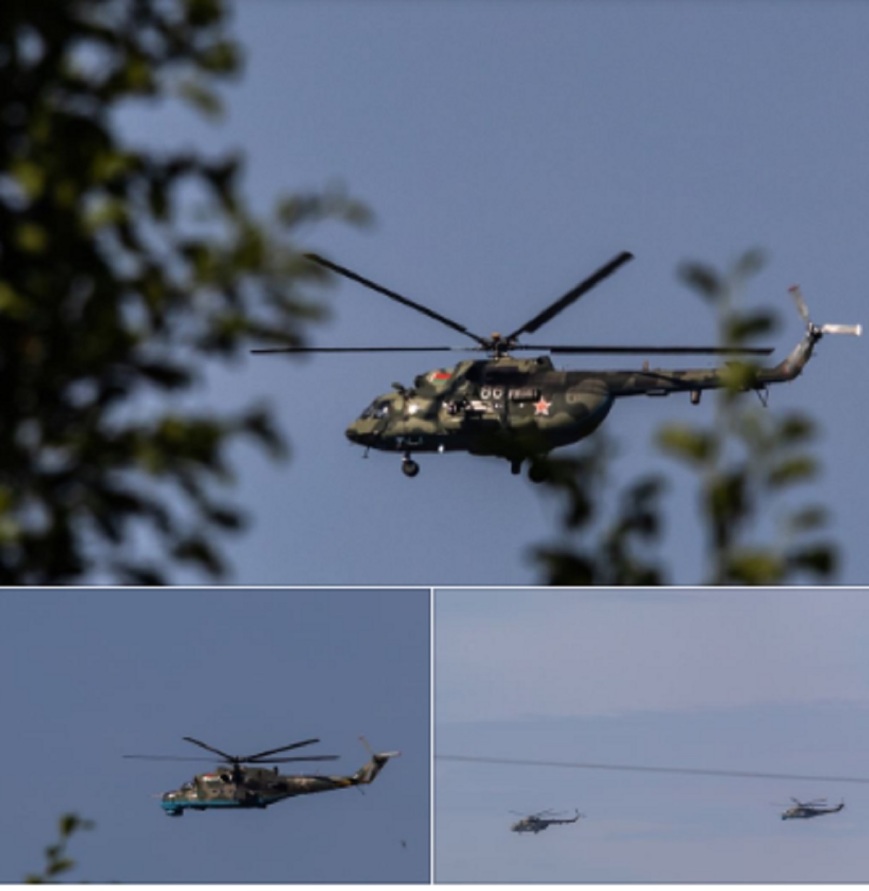 Residents of Białowieża: Belarusian helicopters flew over our heads. The Ministry of National Defense denies it

 NC POWER OUTAGE AREA MAP
 Rachael Riley








 US NAVY USS Jimmy Carter (Seawolf Class

















 Ilyushin Il-76
 (Data Source:
  US Overseas Military Bases


 Chinese and Russian nuclear bombers fly over Sea of Japan as Biden visits Tokyo Japan condemns joint exercise as ‘provocative’ and ‘unacceptable’ Russian and Chinese bombers pictured by Japan’s Air Self-Defense Force on Tuesday © Defense Ministry of Japan/Reuters








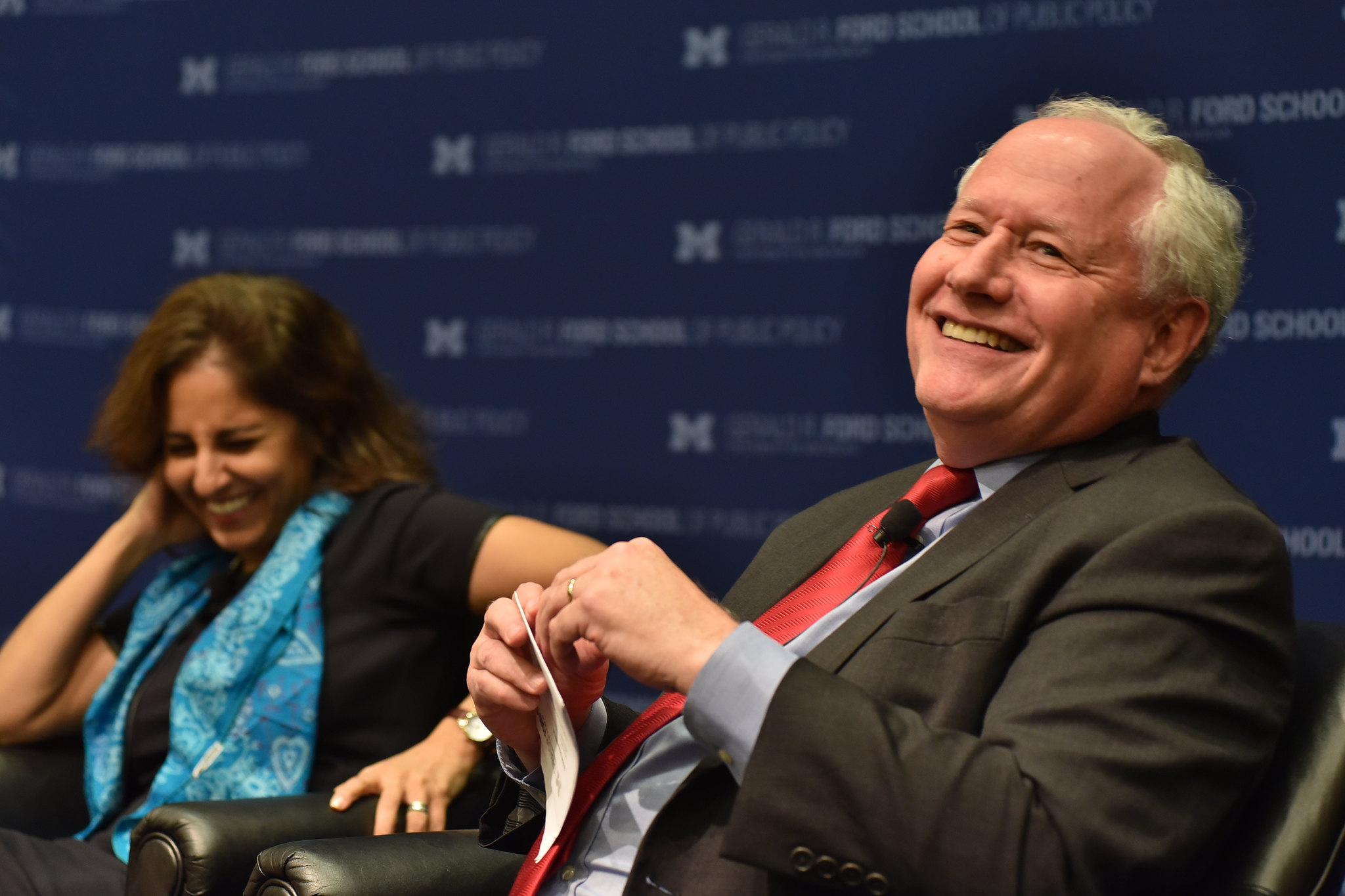
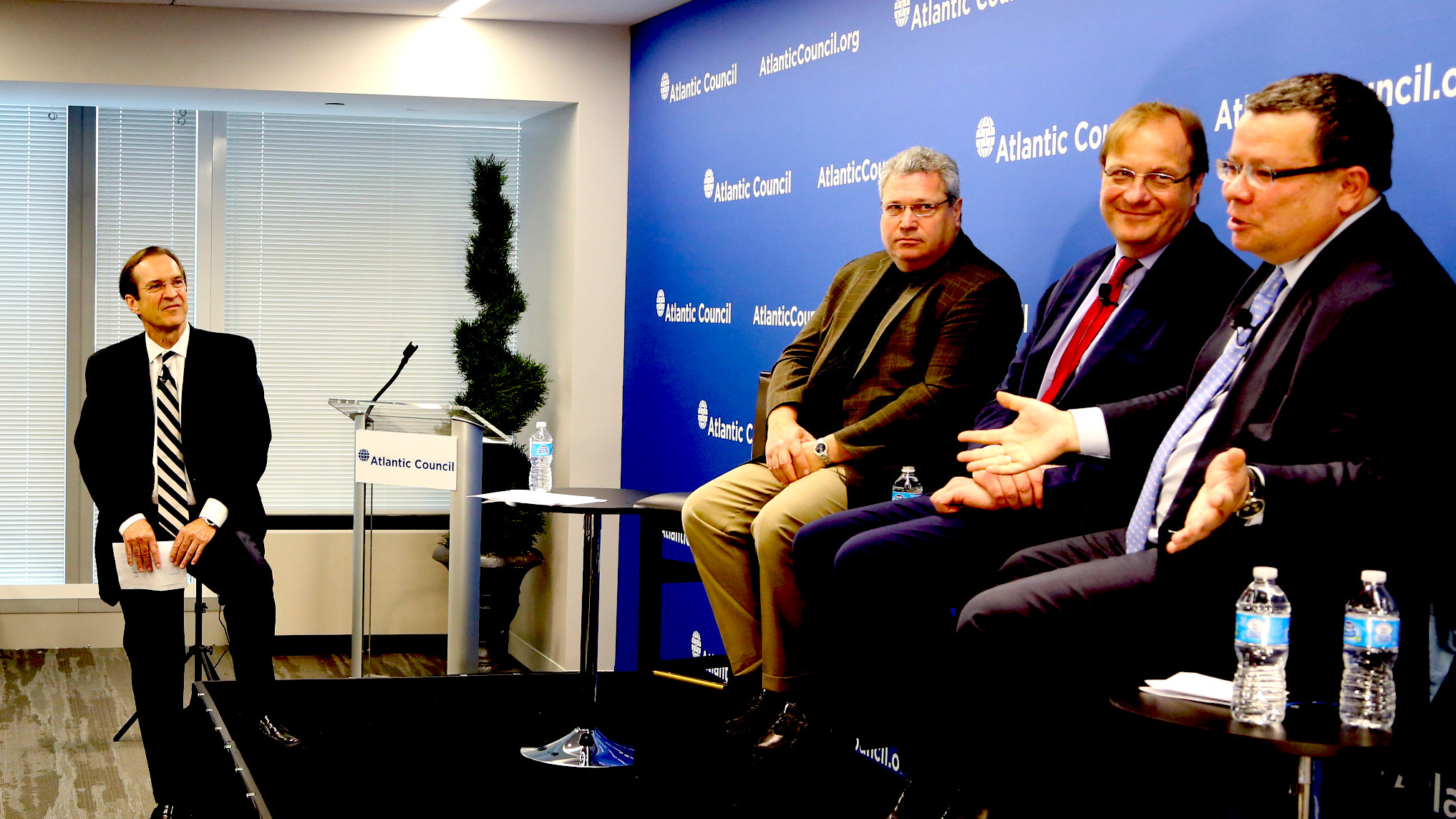
 The same cabal of warmongering pundits, foreign policy specialists and government officials, year after year, debacle after debacle, smugly dodge responsibility for the military fiascos they orchestrate. They are protean, shifting adroitly with the political winds, moving from the Republican Party to the Democratic Party and then back again, mutating from cold warriors to neocons to liberal interventionists. Pseudo intellectuals, they exude a cloying Ivy League snobbery as they sell perpetual fear, perpetual war and a racist worldview, where the lesser breeds of the earth only understand violence.

















 A technician at the African Health Research Institute in Durban, South Africa, where the study was carried out. Photo: Bloomberg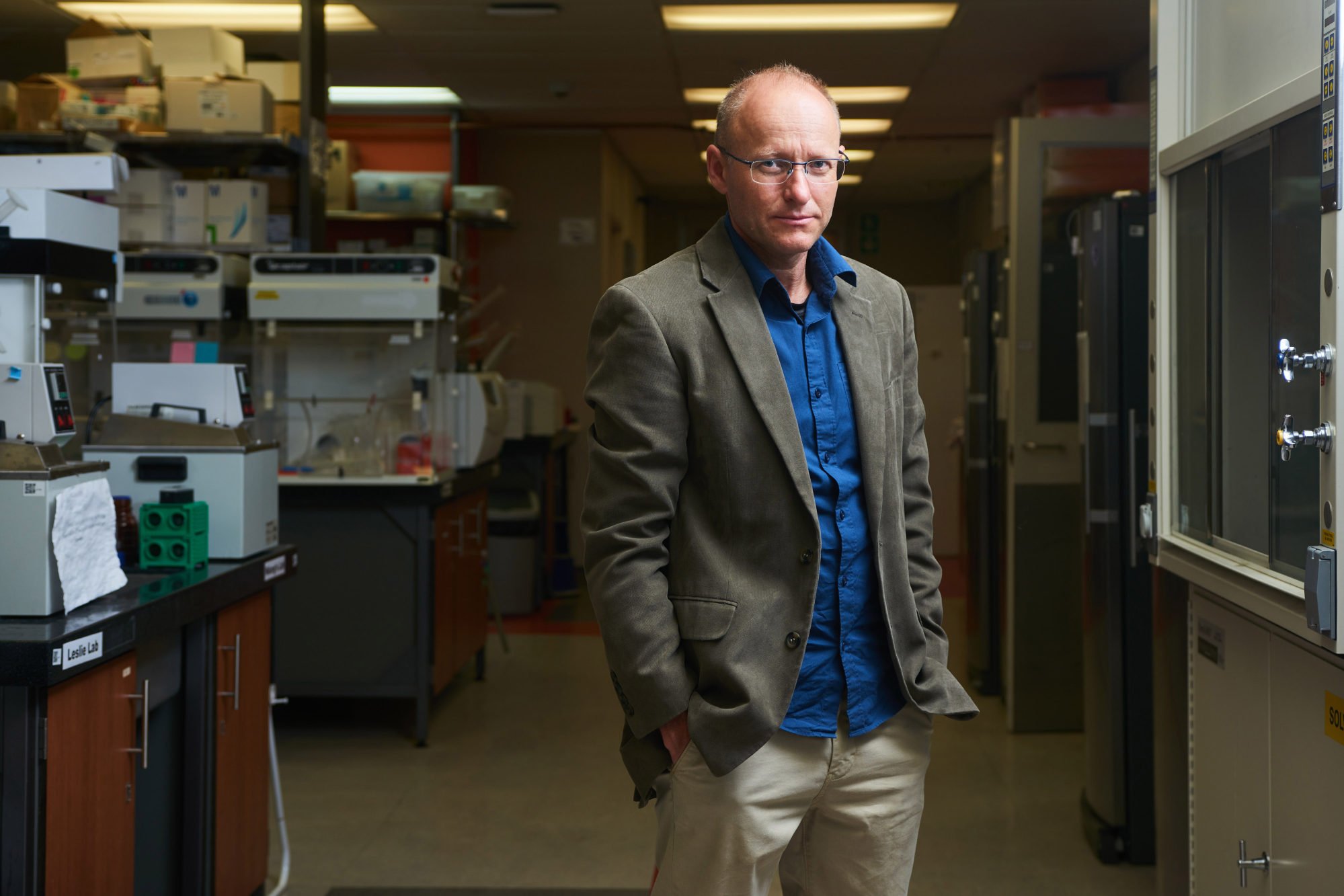












/cloudfront-us-east-1.images.arcpublishing.com/gray/QUBXBR6ZOVAS7G4VOSEBBCTS7U.bmp)
 ThereAreNoSunglasses