Pakistan Chafes Over Afghanistan Asking for Heavy Weapons from India

Pakistan urges Afghanistan to consider regional implications of arms deal with India

truth dive

Islamabad, May 25 (ANI): The Foreign Office in Pakistan has urged Afghanistan to consider the regional security situation while pursuing an arms purchase deal with India.

At a media briefing on Friday, Foreign Secretary Jalil Abbas Jillani said as a sovereign country Afghanistan can pursue its own policies, but it should mind the overall peace and security situation in the region.

According to Dawn News, Jillani was responding to reports that Afghan President Hamid Karzai, during a visit to India earlier this week, had asked the Indian leadership to provide arms to Afghan army.

Karzai’s wish list is not yet known but, according to media reports, he has sought 105mm artillery, medium-lift aircraft, bridge-laying equipment and trucks.

Kabul made the request under its strategic partnership agreement, signed by the two countries in 2011, with New Delhi, which provides for training of troops and supply of military hardware.

India has already been providing training and small arms to Afghan troops, but has rarely publicly acknowledged it because of regional sensitivities.

According to the report, it was expected that the demand by Afghanistan would cause anxiety in Islamabad, which has always remained opposed to Indian engagement with Afghan security forces. (ANI)

World Awareness Grows of Massive American War Crime Formerly Known As “Iraq”

[When will American leaders admit the absolute truth about Iraq?

The United States HAD NO REASON TO INVADE IRAQ,

neither did it offer a valid excuse which wasn't entirely fabricated on premeditated lies.  The war against Saddam Hussein had NOTHING to do with the "war on terror," yet Republican Neocons convinced the rest of us to allow them the pleasure of this little side war, even squeezing it until it (somehow) fit within the parameters of the original 911 AUMF war resolution.   The invasion and occupation of Iraq was 100% REVENGE for Saddam Hussein's arrogant refusal to lie-down and die, but mostly, for threatening to kill Bush's father.  All the rest is 100% BULLSHIT, invented either by the Republicans to justify the criminal war of aggression, or by the Democrats, to justify continuing the war.

Until American leaders take the simple first-step of admitting that Iraq was a crime, we can expect all of our wars to continue to fall apart, as more and more people awaken to the Nazi nature of the American regime and join resistance forces which offer some kind of fight against US global tyranny.

The criminal policies of Bush and Cheney and the Republicans have been compounded by the criminal neglect of Obama and Biden and the Democrats.  May the war crimes of America's criminal two-headed war party continue to follow this Nation until the end of our days, or until we confess about our evil war crimes against all of humanity and beg our fellow man for forgiveness for the monstrous divisions that we have unleashed upon the Earth.]

In Syria’s shadow, Iraq violence presents new test for U.S. 

Reuters

Iraq's Prime Minister Nuri al-Maliki (L) and U.S. President Barack Obama (R) hold a joint news conference in the Eisenhower Executive Office Building on the White House campus in Washington, December 12, 2011. REUTERS Jonathan Ernst

Iraq’s Prime Minister Nuri al-Maliki (L) and U.S. President Barack Obama (R) hold a joint news conference in the Eisenhower Executive Office Building on the White House campus in Washington, December 12, 2011.

Credit: Reuters Jonathan Ernst

By Warren Strobel

WASHINGTON

(Reuters) – Saddled with Middle East problems ranging from Iran to Syria and beyond, President Barack Obama now faces one that is both old and new: Iraq.

Unresolved sectarian tensions, inflamed by the raging civil war in neighboring Syria, have combined to send violence in Iraq to its highest level since Obama withdrew the last U.S. troops in December 2011, U.S. officials and Middle East analysts say.

A Sunni Muslim insurgency against the Shi’ite-led Baghdad government has also been reawakened. The insurgents’ defeat had been a major outcome of then-President George W. Bush’s troop “surge” in 2007.

The deteriorating situation – largely overshadowed by a Syrian civil war that has killed 80,000 people – has prompted what U.S. officials describe as an intense, mostly behind-the-scenes effort to curb the violence and get Iraqis back to political negotiations.

The United States spent hundreds of billions of dollars and lost nearly 4,500 soldiers during an eight-year war to try to bring a semblance of democracy to strategically placed, energy-rich Iraq.

But Iraqis have failed to agree on a permanent power-sharing agreement, threatening the country’s long-term stability.

Vice President Joe Biden, who has been Obama’s point man on Iraq, called Iraqi Prime Minister Nuri al-Maliki, Iraqi Kurdish leader Massoud Barzani and Osama Nujayfi, the head of Iraq’s parliament, in a round of calls on Thursday and Friday, the White House said.

To Maliki, the vice president “expressed concern about the security situation” and “spoke about the importance of outreach to leaders across the political spectrum,” Biden’s office said in a statement on Friday.

U.S. diplomacy is aimed in part at persuading Maliki, a Shi’ite, and his security forces not to overreact to provocations. Maliki’s opponents accuse him of advancing a sectarian agenda aimed at marginalizing Iraq’s minorities and cementing Shi’ite rule.

The latest uptick in violence began in late April at a Sunni protest camp in Hawija, near the disputed city of Kirkuk, where a clash between gunmen and Iraqi security forces killed more than 40 people.

A U.S. official said the Obama administration was “very actively engaged” after the Hawija clash in preventing a further escalation, when Iraqi forces surrounded insurgents who had seized control of a nearby town. Washington urged the Iraqi forces not to go in with massive firepower, and the stand-off was settled through a deal with local tribal leaders.

“I don’t want to exaggerate our influence, but this is the kind of stuff we do behind the scenes,” said the official, who spoke on condition of anonymity. “When there is a real crisis, they all run to us. … We’re a neutral party.”

Others say Washington’s influence in Iraq, which began waning even when U.S. troops were still there, has plummeted.

“What is lacking is the lack of confidence of trust among the politicians,” Iraqi Foreign Minister Hoshyar Zebari told CNN on Tuesday. “And we have lost the service of an honest broker. Before, it used to be the United States.”

‘ZOMBIE INSURGENCY’

Most worrying to U.S. officials and analysts who follow Iraq closely is the rebirth of the Sunni insurgency and of groups such as al Qaeda in Iraq, thought to be behind lethal suicide bombings aimed at reigniting civil conflict.

“What you’re really looking at here is a kind of zombie insurgency – it’s been brought back to life,” said Michael Knights of the Washington Institute for Near East Policy, who has studied Iraq for years and travels there frequently.

By his count, violent incidents have escalated to about 1,100 a month from 300 monthly at the end of 2010.

After the Hawija clashes, the U.S. official said, “For the first time really in a few years, we saw people with their faces covered and RPGs (rocket-propelled grenades) and heavy weapons, coming into the streets in a very visible way.”

The official called the increase in suicide bombings by al Qaeda in Iraq “very concerning,” adding that such sophisticated insurgent groups could “wreak havoc” on political efforts to solve the conflict.

“I wouldn’t call it a strategically significant increase, yet,” the official said of the violence. “We’re in this post-civil war, pre-reconciliation interregnum, gap, period, in which Iraq can tilt either way.”

The setbacks in Iraq have revived criticism from those who opposed Obama’s decision to withdraw all U.S. troops from the country, rather than leave behind a residual force. The White House has said it could not secure political agreement from Iraq’s Sunni, Shia and Kurds for a law allowing a continued troop presence.

At a Senate hearing last month, Senator John McCain, who opposed the troop withdrawal, asked Assistant Secretary of Defense Derek Chollet how things turned out in Iraq. McCain, an Arizona Republican, cited Obama’s dictum that “the tide of war is receding.”

“I think Iraq is more stable today than many thought several years ago,” Chollet replied.

“Really? You really think that?” McCain pressed. When Chollet said he did, the senator shot back, “Then you’re uninformed.”

The violence, which includes confrontations stemming from the Sunni protest movement, near-daily car bombings and attacks on mosques, is nowhere near the level of Iraq’s 2006-2008 civil war.

Still, Kenneth Pollack, a former CIA and White House official now at the Brookings Institution’s Saban Center for Middle East Policy said: “I think we’re going to see great sectarian violence. The question is, how bad does it get?”

SYRIA IS ‘AN ACCELERANT’

Syria’s increasingly sectarian civil war, pitting mostly Sunni rebels against the government of President Bashar al-Assad, is not the prime cause of Iraq’s troubles, officials and analysts said.

Iraq’s failure to find a stable power-sharing deal among the country’s ethnic and sectarian groups is to blame, they said. Iraq’s Sunnis, ascendant during dictator Saddam Hussein’s rule, feel excluded and threatened, and started staging protests in December.

But Syria’s war “is an accelerant” in Iraq, Pollack said.

“We’re seeing both Shia and Sunnis going over to fight” in Syria, the U.S. official said. “It’s kind of encouraging this sectarian polarization in a way.”

Iraqis often experience the Syrian conflict via YouTube video clips, he said.

Sunnis see the violence perpetrated by Assad’s government, dominated by members of the Alawite sect, an offshoot of Shia Islam, he said. Iraq’s Shia see often gruesome excesses perpetrated by the rebels.

“They’re seeing two entirely different parallel universes,” the official said.

(Additional reporting by Phil Stewart; Editing by Alistair Bell and Peter Cooney)

Hezbollah and the Syrian Pit

Hezbollah and the Syrian Pit

Why Washington and Tel Aviv Want Hezbollah to Keep Fighting in al-Qusayr


by FRANKLIN LAMB


Homs Province, Syria.

During a tour of some of the neighborhoods in Homs, Syria’s third largest city after Aleppo and Damascus, with a pre-conflict population of approximately 800,000 (nearly half  Homs residents have fled over the past two years) located maybe about 22 miles NE of the current hot-spot of al-Qusayr, this observer engaged is a few interesting conversations.  More accurately labeled diatribes–with some long bearded Sunni fundamentalists who claimed they came from Jabhat al Nusra, aka Jabhat an-Nuṣrah li-Ahl ash-Shām, “Front of Defense for the People of Greater Syria”), and were preparing to return to al Qusayr to fight “the deniers of Allah”!

It is the strategic crossroads town of al-Qusayr, and its environs, which whoever controls, can block supplies and reinforcements to and from Damascus and locations north and east.  For those seeking the ouster of Syria’s government, including NATO countries led by Washington,  were their “allies”  to lose  control of al-Qusayr it would mean the cutting off of supplies from along the Lebanese border, from which most of the local opposition’s weapons flow and fighters have been smuggled over the past 26 months. If the Assad regime forces regain control of the city, Washington believes they will move north and conquer current opposition positions in Homs and Rastan, both areas being dependent on support from Lebanon and al-Qusayr. Some analysts are saying this morning, with perhaps a bit of hyperbole that as al-Qusayr goes so goes Syria and the National Lebanese Resistance, led by Hezbollah.

If government forces can retake the city it will  put an end to the  Saudi-Qatari green light, in exchange for controlling al-Qusayr, of the setting up a Salafist emirate in the area which would constitute a threat to the nearly two dozen Shia Lebanese inhabited villages of the Hermel region. If the Syrian army re-takes al-Qusayr, it would also avoid the likelihood of a full-fledged sectarian war on both sides of the border.

Meeting with a few self-proclaimed al Nusra Front militiaman last week, in Homs, one who spoke excellent British English they had plenty to say  to this observer about current events in al Qusayr to which they planned to return the next day to fight enemies “by all means Allah gives us”.  One added, when asked if they had confronted Hezbollah: “Of course but Hezbollah can’t defeat us. Eventually they will withdraw from Syria on orders from Tehran.  But first enshallah we will bleed Hezbollah with thousands of cut throats”, he boasted raucously as nearby kids  cheered and gave V for victory signs, smiles, giggles and cackling all around.

Such Jihadist rants are music to more than a few US congressional and White House ears these days, as once more in this region,  a major US-Israeli carefully calibrated regime change project,  appears to be falling short.

This week, the US Senate Foreign Relations Committee voted overwhelmingly to arm elements of the Syrian opposition with a recommendation to “provide defense articles, defense services, and military training” directly to the opposition throughout Syria, who naturally, will “have been properly and fully vetted and share common values and interests with the United States”.  History teaches that the vetting part would not happen if the scheme is implemented, despite only a few in Congress objecting.

Perhaps lacking some of his father Ron Paul’s insights into US hegemonic plans for this region, Senator Rand Paul did object to the measure and he fumed at his colleagues: ”This is an important moment. You will be funding, today, the allies of al Qaeda. It’s an irony you cannot overcome.”

According to the Hill Rag weekly, veteran war-hawks Senators John McCain and Lindsay Graham, flashed a knowing smile but gave no rebuttal, perhaps realizing that Senator Paul is a bit untutored on the reality of current Obama Administration policy in Syria generally, and for al-Qusayr, in particular.

Contrary to the shock and anger expressed by Senator Paul, American policy in Syria is  to de facto  assist allies of al Qaeda including the US  “Terrorist-listed”  Al-Nusra Front as well as anti-Iran, anti-Shia and anti-Hezbollah groups gathering near al-Qusayr. These groups currently include, but not limited to,   Ahl al-Athr Brigade, Ahrar al-Sham,  Basha’ir al-Nasr Brigades, Commandos Brigades, Fajr al-Islam Brigades, Independent Farouq Brigades, Khalid bin al-Waleed Brigade, Liwa al-Haq, Liwa al-Sadiq, Al-Nour Brigade, Al-Qusayr Brigade, Suqur al-Fatah, Al-Wadi Brigades, Al-Waleed Brigades and the 77th Brigade among the scores  of other Jihadist cells currently operating in, near, or rushing to, al-Qusayr.

Their victory according to US Senate sources would be a severe blow and  challenge to Iran’s rising influence in the region and Iran’s  leadership of the increasing regional and global resistance to the Zionist occupiers of Palestine in favor of the full right to return of every ethnically cleansed Palestinian refugee.

While Congress was considering what else to do to help the “rebels”, on 5/22/13,  no fewer than 11 so-called “World powers” foreign ministers, including Turkey and Jordan, met in Amman to condem,  with straight faces, even, tongues in cheek, the “flagrant intervention” in Syria by Hezbollah and Iranian fighters.”  They urged their immediate withdrawal from the war-torn country. In a joint statement, the “Friends of Syria” group called “for the immediate withdrawal of Hezbollah and Iranian fighters, and other regime allied foreign fighters from Syrian territory.”

Not one peep of course, about the Salafist-Jihadist-Takfuri fighters from more than 30 countries now ravaging Syria’s population. The truth of the matter is that the governments represented by their foreign ministers this week in Amman, will follow the US lead which means they will assist, despite some cautionary public words, virtually any ally of al-Qaeda whose fighting in Syria may be seen as weakening the Assad government and its supporters in Iran and Lebanon.

According to one long-term Congressional aid to a prominent Democratic Senator from the West Coast, while the Amman gathering described Hezbollah’s armed presence in Syria as “a threat to regional stability”, the White House could not be more pleased that Hezbollah is in al-Qusayr.”  When pressed via email for elaboration, the Middle East specialist offered the view that the White House agrees with Israel that al-Qusayr may become Hezbollah’s Dien Bein Phu and the Syrian conflict could well turn into Iran’s “Vietnam”. ..Quite a few folks around here (Capitol Hill) think al-Qusayr will remove Hezbollah from the list of current threats to Israel.  And the longer they keep themselves bogged down in quick-sand over there the better for Washington and Tel Aviv. Hopefully they will remain in al-Qusayr for a long hot summer and gut their ranks in South Lebanon via battle field attrition and Israel can make its move and administer a coup de grace.”

The staffer followed up with another email with only one short sentence and a smiley face:

“Of course the White House and its concrete wall-solid ally might be wrong!”

The dangers for Hezbollah are obvious – that it may be drawn ever deeper into a bottomless pit of conflict in Syria that could leave it severely depleted and prey to a hoped for death-blow from Israel.

Hezbollah Secretary-General Hassan Nasrallah and other party officials have dismissed that possibility.

The next few weeks may tell.

Franklin Lamb is doing research in Syria and Lebanon and is reachable c/o fplamb@gmail.com

Obama To Make All Wars Covert Wars—He’s Running Scared

obama-doubletalk.jpg w=450&h=126

[Obama's speech and the following report about it are total bullshit...disinformation at best.  Nobody has any intention of ever ending this war, no matter how many times Obama claims to be doing it.  He has no more intention of closing Guantanamo Bay today than he did the last time he promised to close it.  The very fact that Team Obama has made this public speech about ending America's "perpetual wartime footing," is proof that the Establishment is running scared over anti-war and anti-police state sentiments.  Perpetual, or "persistent war" are descriptions of the American terror war that have come straight from the Pentagon itself.  The fact that Obama felt it necessary to disassociate his administration from this idea of a "perpetual" war or a thirty-year war, is proof positive that this is a very touchy issue. 

We the People are slowly starting to catch-on to the schemes of the American ruling class, worrying all of them that we will figure-out what they have been doing to us before they get finished fucking us.  This is why Obama is giving this speech (SEE: Obama Trying To Make Rape Look Like Seduction ).  It is good to know that the idea of an American awakening gives the Big Bosses a little trouble sleeping.  It is way past time to repeal the completely worn-out AUMF (authorization to use military force) from the 911 attacks:

"To authorize the use of United States Armed Forces against those responsible for the recent attacks launched against the United States."

Since we are no longer engaged anywhere with any of the "al-Qaeda" factions which have been blamed for the attacks, and because we are now allied with some of those same "al-CIA-da" groups in Syria and in Africa, the government should be forced into producing a brand new "authorization for military force," defining precisely who we are fighting against into the forseeable future, and even more important, why we are waging war against them.]

Should President Obama end the war on terror?

cbsnews

He came to talk about the future, but the past keeps pulling him back.

President Obama outlined his vision for a revised American counterterrorism policy during Thursday’s speech at the National Defense University in Washington, D.C., renewing his call to close the detention facility at Guantanamo Bay and announcing new guidelines to govern the use of targeted drone strikes on foreign soil.

Animating many of the president’s proposals was a stated desire to “discipline our thinking and our actions” and to move America away from a “perpetual wartime footing” that has held sway for nearly 12 years, since Congress passed an Authorization to Use Military Force [AUMF] in the aftermath of the terrorist attacks on September 11, 2001.

The president pledged to “work with Congress” to “refine and ultimately repeal” the AUMF, warning that a strategy of “perpetual war – through drones or special forces or troop deployments – will prove self-defeating, and alter our country in troubling ways.”

Simply put: While “our systematic effort to dismantle terrorist organizations must continue,” the president said, “This war, like all wars, must end.”

While Mr. Obama has spoken before about the need for a return to normalcy of sorts in how America views and responds to terrorist threats, rarely has he expressed that point so baldly and called for an outright “end” to the nearly-12-year old conflict.

But should the “war on terror,” as we know it today, be drawn to a conclusion, given the continued threat posed by terrorists? And with the hypersensitivity attending public discussion on the issue, is it politically realistic to expect a declared end to the “war on terror” any time soon?

The “big question here is whether the president’s words translate into real policy or operational practice,” said CBS News senior national security analyst Juan Zarate. “Ultimately, the threats, as they continue to morph, will dictate how willing we are to constrain [counterterrorism] power.”

And the “political realities” of zero tolerance for terrorist attacks on the homeland will jeopardize “any attempts to limit our [counterterrorism] actions,” added Zarate, also a former deputy national security adviser in the George W. Bush administration.

“The most important advance in the speech was the acknowledgement that the war will end at a foreseeable point in the future,” former assistant secretary of state for public affairs P.J. Crowley told CBSNews.com. “This will require an unwinding of policies, authorities and tactics that have accumulated over the past dozen years.”

But if the immediate reaction to Mr. Obama’s speech is any indication, some in Congress are not so keen on abandoning America’s post-9/11 counterterrorism policies, with several Republican senators blasting the president for what they fear is a premature pivot.

The president’s speech “will be viewed by terrorists as a victory,” Sen. Saxby Chambliss, R-Ga., said in a statement. “Rather than continuing successful counterterrorism activities, we are changing course with no clear operational benefit.”

Play Video

GOP Sens. slam Obama’s suggestion that war on terror “must end”

“To somehow argue that al Qaeda is quote, ‘on the run,’ comes from a degree of unreality that is really incredible,” Sen. John McCain, R-Ariz., said after the president’s speech Thursday afternoon, arguing that the terrorist syndicate is expanding, not contracting. “To somehow think we can bring the authorization of the use of military force to closure conflicts with the reality of the facts on the ground.”

Crowley knocked Republicans for pushing a strategically and legally “unsustainable” policy, explaining, “We have invested significant powers in the president in a time of war, but to suggest that we will be engaged in war indefinitely fundamentally changes the Constitution, and I don’t know that the American people want that and I’m not sure that the congress wants that either.”

“Wars have beginnings, wars have endings, and wars have defined boundaries,” he said. “Without specifics, then it’s impossible to define success.”

And a failure to augment America’s counterterrorism posture, Crowley warned, could present dangers separate from the concerns voiced by GOP senators. “The concept of indefinite war plays into the al Qaeda narrative,” he explained, noting the grievances that foreign populations have voiced about America’s aggressively militarized counterterrorism policies. “When you project the prospect of indefinite war, that continues to suggest that the military will always be the primary instrument, and we have said many times that we can’t kill our way out of this problem.”

He added that the president “signaled very clearly that the challenge of terrorism is not going away,” and that he is only striving to combat that terrorism in different ways as the threat evolves.

Michael O’Hanlon, a senior fellow at the Brookings Institution, echoed Crowley on that point, telling CBSNews.com in an email that the president’s speech was “hopeful…in intent in aspiration, but also conservative in not abandoning any existing tools of warfare prematurely.”

So where do we go from here? If the existing tools in the war on terror are increasingly difficult to situate within the 2001 authorization of military force, as Crowley and others argued, can Congress be expected to revise – or repeal outright – that authorization to accommodate evolving realities?

Sen. Bob Corker, R-Tenn., offered at least a glimmer of an opening to the president in a statement released before the speech, arguing that that the 2001 AUMF is “increasingly unrelated to current terrorist threats,” and welcoming discussions with the administration and bipartisan members of congress on “how best to pursue necessary updates to the authorization for use of military force.”

“I hope that Congress is open to a revision of the AUMF for a variety of reasons,” Crowley said, “but if we’re still at war, the American people need to know that we’re still at war and they need to be assured that what we continue to do in various places around the world is consistent with both domestic and international law.”

“The immediate response from members of Congress” on revising the AUMF “is not surprising but disappointing,” Crowley said.

Zarate added that, while the president’s “promise of eventual repeal is quite significant,” it “will never be done in this term.”

And as the promise of a long, hard slog awaits the president and those who support his push to pull Americans back from the fever pitch of a perpetual “war on terror,” some argued that an abundance of patience might be in order.

“The president suggested that at a point, the war against al Qaeda or the war on terror will end just like all wars eventually end,” Crowley said. “He didn’t say it would be tomorrow.”

  • prev
  • no next page
2/2

© 2013 CBS Interactive Inc. All Rights Reserved.
Immigrant Rioting In Stockholm for 5 Consecutive Days

stockholm riots

Schools burn on fifth night of Stockholm riots

Schools burn on fifth night of Stockholm riots

the local sweden

At least two schools, a police station, and 15 cars were set ablaze in Stockholm on Thursday night as riots in the suburbs of the Swedish capital continued for the fifth straight night.

In Rinkeby a predominantly immigrant district in northern Stockholm, firefighters rushed to put out flames that engulfed six cars parked alongside each other. Five cars were totally gutted, and one sustained more moderate damage, according to an AFP photographer on the scene.

The continued vandalism left local residents irate, with hundreds gathering at the scene to express their frustration.

“People are furious; they think Rinkeby is better than this,” Scanpix photographer Fredrik Sandberg told the TT news agency from the scene.

Three more cars were torched in the southern suburb of Norsborg, and a police station in Älvsjö, also on the city’s south side, was set on fire but quickly extinguished, police said.

Eight people were arrested in Älvsjö, while four arrests were made in Norsborg.

IN PICTURES: See what people in Husby told The Local about the riots

Firefighters also reported a school in Tensta, another north Stockholm suburb, was set ablaze but quickly extinguished, while a Montessori school in the neighbouring Kista suburb was also on fire.

“This makes me extra angry. Are things going to get better if people set schools on fire?” Kista resident Aleks Sakala, a father with two children enrolled at the school, told the Expressen newspaper.

“This is as far from good sense as you can get. This is madness. Where will my kids go to school tomorrow? They probably won’t be able to finish out the term.”

Meanwhile, police in Södertälje, a town south of Stockholm, said rioters threw stones at them as they responded to reports of cars set alight.

Car fires were reported in the suburb of Sollentuna, while a car fire in Jordbro had spread to a nearby shopping centre before being brought under control, police told the Aftonbladet newspaper.

“It still feels like things have been calmer tonight, at least that’s our impression. There are a lot of volunteers out on night patrols and that may have helped,” police spokeswoman Towe Hägg told the newspaper.

The previous night, the fire brigade had been called to some 90 different blazes, most of them caused by rioters.

The unrest that has plagued Stockholm throughout the week began Sunday in Husby, with many believing they were triggered by the fatal police shooting of a 69-year-old Husby resident last week after the man wielded a machete in public.

IN PICTURES: See the damage from the Husby fires

The man had fled to his apartment, where police have said they tried to mediate but ended up shooting him dead in what they claimed was self-defence.

Local activists said the shooting sparked anger among youths who claim to have suffered from police brutality. During the first night of rioting, they said police had called them “tramps, monkeys and negroes.”

Police meanwhile have downplayed the scale of the events.

“Every injured person is a tragedy, every torched car is a failure for society… but Stockholm is not burning. Let’s have a level-headed view of the situation,” Ulf Johansson, deputy police chief for Stockholm county, said Thursday.

AFP/TT/The Local/dl

Lebanon’s Palestinians are Being Pulled into Syria’s War

Lebanon’s Palestinians are Being Pulled into Syria’s War

uprooted palestinians
Franklin Lamb
Al-Manar

Historically, Palestinian refugees, wherever they have sought temporary sanctuary following the ethnic cleansing of their country by the 19th century Zionist colonial enterprise, and pending their return to Palestine, have insisted on avoiding local and international conflicts while seeking a modicum of interim rights from the host countries.

This was true in Jordan during the run up to Black September in 1970, at the beginning of the Lebanese Civil war in 1975, the 1991 Kuwait crisis, the 2003 US invasion of Iraq and obtains especially today in the current crisis in Syria. For a number of reasons including poor tactical decisions by their leadership they have not always succeeded, and consequently they have paid steep price in lives, jobs, housing and expulsions from host countries.

Yarmouk campIn Syria, both the largest Palestinian refugee camp, Yarmouk, with its 125,000 residents, and Khan al-Sheeh, the second largest of the 14 camps with 45,000 before the crisis but currently swelled by another 26,000 mainly from Yarmouk camp, have become virtual war zones with large sections of the camps being overrun by gunmen fighting in support of the “Free Syrian Army.” All but two of the camps in Syria have been infiltrated by opposition forces and consequently have been targeted by government forces seeking to destroy the rebels. At times the camp residents have resisted both sides by demanding that the camps’ normally strict neutrality be respected. Engaging initially in peaceful protects when outsiders invaded, some protests turned violent when their demands for camp neutrality were rejected.

Khan al-Sheeh, whose residents are from tribes and clans in northern Palestine, and who lost 22 camp residents to Zionist occupier gunfire during the May 2011 Nakba Day events on the Golan Heights, will be a formidable foe if they take up arms which they have not done for the past 33 years.

In January 2013, the Syria conflict entered into the camp when opposition forces — a combination of Free Syrian Army (FSA) and al-Nusra Front fighters — arrived and insisted on recruits, offering $200 per month cash, free cigarettes, a uniform, boots and of course an AK-47.

For the past five months, again like Yarmouk, Khan al-Sheeh and the other camps in Syria have been caught in the crossfire as opposition fighters try to advance toward the capital, while regime forces used cannons and rocket fire to block their advance, resulting in hundreds of civilian deaths and injuries. This week, so far in vain, the camp popular committees yet again appealed to both sides to observe a ceasefire within any Palestinian camp in Syria and also in Lebanon, the latter currently experiencing increased challenges for its 12 camps to stay out of the conflict.

Pressuring Lebanon’s camps to join Syria’s war

Lebanon’s widely respected independent leftist daily, As-Safir, has reported that veteran security and intelligence officers of the Lebanese security services are claiming to have information, but not precise details regarding number and location of “organized Takfiri (Sunni) networks” in Lebanon. The head of one security service told As-Safir, “the monitoring of the terrorist networks cannot be very detailed since they are solely located in the Palestinian camps, mainly in Ain el Helweh.”

Palestinian refugee camps in LebanonThis statement, like others these days in the Lebanese sectarian media, appears intended to incite the public against the refugees, inducing them to join the fighting. Another officer, closely working on the Lebanese government “terrorism” file, claims, again without offering any probative or material evidence, that “the only serious faction in Lebanon right now consists of the Ziad al-Jarrah Units that are affiliated with the Abdullah Azzam battalions.” Both have some Palestinian gunmen. Abdullah Azzam is the most experienced group and it is present in Ain el Helweh. The officer indicated that he agrees with the general theory that as long as the military situation in Syria remains unsettled, the Lebanese Palestinian camps are open to all possibilities, including Palestinian armed involvement.

Other calls are being heard from Beirut, Saida and Tyre in the south, and also up north in Tripoli for Palestinians to comply with the fatwas being issued for all Sunni to fight the Bashar Assad regime and to build a “Sunni army” patterned after the Lebanese civil war-era PLO forces. How significant is the sentiment favoring this dangerous call is unknown. However, in all of the above noted areas, some Palestinians, mainly unemployed youngsters have been lured by offers of cash to take part in training, much like occurred before the 26 month old Syria conflict.

Some Salafist-jihadist types in Lebanon, especially near Tripoli’s Bedawi, and Nahr al Bared camps, as well as Ain el Helwe down south in Saida, are pushing among Palestinian youth the argument that if they join the war in Syria they will gain the internationally-guaranteed civil rights that all the other refugees receive except Palestinians in Lebanon. Part of the argument being pitched is that they are not going to get even elementary civil rights in Lebanon from Israelis, the UN or the international community, and certainly not from the EU or the Americans. Palestinians in Lebanon’s camps are being lectured that they will get civil rights here only when they take them by force, which is their right and their jihadist religious duty.

These arguments will fail, with few exceptions, among the quarter million Palestinian refugees actually still in Lebanon, as they have in the past. But the Palestinians’ decent into deepening sectarian and religious divisions here in Lebanon is worrisome. Scholars, political analysts and even elements of the National Lebanese Resistance are counseling that an effective, moral, religious, and political measure that could bring Sunni and Shia together in Lebanon, while thwarting the schemes being hatched to get the Palestinians involved in the Syrian crisis, would be for the Lebanese Parliament to use 90 minutes of its ample free time — in as much as the Parliamentary elections will not take place next month as scheduled — to address the issue of Palestinian civil rights in that country.

Lebanese ParliamentBy using 20 minutes of the proposed 90, recommended by the Palestine Civil Rights Campaign here, Lebanon’s Parliament can, in one fell swoop, reach out to the Sunni community and the Christian community (about 90% of Palestinians in Lebanon are Sunni and approximately 10% Christian) by employing a quick and tidy yea-nay vote to repeal the 2001 racist law that forbids home ownership for Palestinian refugees here. This law outlawing the home ownership civil right for Palestinians only, as expressed by the two initial sponsors still in Parliament, was only originally meant as a 2001 election year gimmick to garner anti-Palestinian votes and not ever intended to be implemented.

History teaches us that the 2001 law was in fact part of the anti-Palestinian “pay-back” for the PLO’s involvement in the fifteen-year Lebanese civil war (1975-1990). In what many Palestinians in the camps here objected to then and continue to view as a cataclysmic error, its leadership ignominiously withdrew from Lebanon in the late summer of 1982, under Zionist and Reagan administration pressure and false promises of an immediate Palestinian homeland.

With the remaining 70 minutes, the Resistance-dominated Parliament could reach out to the Sunni and Christian communities as noted above and grant Palestinian refugees in Lebanon the same right to work that every refugee everywhere has, including those in the apartheid state of occupied Palestine. The same right as everyone is immediately granted when their passport is stamped at any Lebanese border post.

This single act by Lebanon’s Parliament, would help repair Shia-Sunni relations globally and would dampen down — and expose for what they are, the extremist Salafist-jihadist-Wahhabist incitements to religious hatred, both intra-Muslim and Muslim-Christian. It would also, according to several Palestinian NGO’s working in Lebanon, keep Palestinians out of the Syrian conflict.

Allowing Palestinians in Lebanon the internationally guaranteed right to work, would also, according to studies by the UN International Labor Organization and other academic studies, substantially build up Lebanon’s fragile economy by creating more than twice the number of jobs that they would be employed at, including  those in the 32 professions  currently outlawed for Palestinian  refugees.

Franklin Lamb is doing research in Syria and Lebanon and  can be reached c/o fplamb@gmail.com

Source: Al-Manar Website
23-05-2013 – 09:27 Last updated 23-05-2013 – 13:40
River to Sea Uprooted Palestinian  

Saudi princes may face UK court over claim they laundered money for Hizbollah

“the Beirut transaction” (laundered money for  Hezbollah) and “the Nairobi transaction” (smuggling gold ore and precious stones from conflict zone, Congo).

From the Democratic Republic of the Congo “to export 5,000kg of ore nuggets worth $140m, plus another export of 5,000kg ore nuggets, 4,000kg of ruby gemstones, 3,000kg of green garnet, 7,000kg of malakis stone and 1,000kg of blue sapphire”.

“We deal with whoever we want, whether it’s Hizbollah, the Mafia or even the Jews.”

GLOBAL TORCH LIMITED
- and -
APEX GLOBAL MANAGEMENT LIMITED

Saudi princes may face UK court over claim they laundered money for Hizbollah

dubai moon

LONDON // Two Saudi princes will hear this week if they are successful in extricating themselves from answering to accusations in a UK court case linking them, and companies in which they are shareholders, with money laundering for Hizbollah and smuggling gems out of Africa.nThe challenge is the latest development in a case brought by Global Torch, a company linked to the two princes, in 2011 against a business partner. The Saudis, who argue the allegations made against them in a countersuit could endanger their lives and damage UK-Saudi relations, last week failed in their attempt to have the evidence heard in secret.nAnd, in March, a court ruled that Mishaal bin Abdulaziz Al Saud, a former Saudi defence minister, and his son, Abdulaziz bin Mishaal bin Al Saud, could not claim diplomatic immunity to avoid prosecution.nThis week, a court in central London’s Rolls Centre, the world’s largest centre for the resolution of financial, business and property litigation, will rule on whether UK courts have jurisdiction over the counterclaims.nIf the court rules against Global Torch, the trial proper will resume in January 2014.nThe suit was originally brought by Global Torch Ltd, a company registered in the British Virgin Islands linked to the two princes, against an Jordanian business partner, Faisal Almhairat, whom they accused of fraud.nThe two sides fell out over a joint venture in a London-registered telecommunications company, Fi Call Ltd. The Saudi princes are understood to own shares through Global Torch, while Mr Almhairat apparently owns part through a Seychelles-based firm, Apex Global Management.nFi Call was understood to be developing a smartphone application to allow people to make free calls.nThe initial litigation involved the alleged misappropriation of funds and illegal sale of US$6.7 million (Dh24.6m) worth of shares by Mr Almhairat. But it prompted Mr Almhairat to bring a counter claim in 2012.nWith it came what a judge presiding over an early stage of the trial described as a “nuclear mushroom cloud” of litigation.nMr Almhairat has brought a wide range of allegations, according to court documents obtained by two British papers, The Guardian and the Financial Times, which brought a suit to ensure that evidence would not be heard in secret.nHis lawyers claim that the princes used their influence with the Saudi police to lodge a warrant with Interpol for Mr Almhairat’s arrest to secure his extradition to Saudi Arabia.nThey also allege that the princes were involved in smuggling precious stones out of the Democratic Republic of the Congo, paid bribes to UN officials to ensure an illicit air cargo worth $2 billion – it is not clear of what – into Nairobi, and were involved with money laundering for Hizbollah, the Lebanese Shiite movement that is designated a terrorist organisation by the US.nPrince Mishaal, 86, is a brother to King Abdullah and the head of the Allegiance Council that will eventually determine succession to the Saudi throne. Any suggestion that the prominent Saudis have been dealing with Hizbollah, which is supported by Iran, could undermine assumptions about Saudi-Iranian enmity, and put Riyadh on a collision course with Washington.nBut according to transcripts of court documents obtained by the Financial Times, Prince Abdulaziz is alleged to have told Mr Almhairat that “we deal with whoever we want”.n”I need to show Hizbollah that we can transfer money to them smoothly. They have potentially billions that they want to be transferred,” the younger prince is alleged to have said. “We deal with whoever we want, whether it’s Hizbollah, the Mafia or even the Jews.”nFor their part, lawyers for Global Torch have labelled Mr Almhairat a “dishonest man” who has a “history of failing to comply” with his business obligations.nNone of the factual issues of the case have yet been resolved. The case is also raising questions about the British legal system’s ability to maintain transparency as it tries to attract litigation cases from around the world.nokarmi@thenational.aentwitter: For breaking news from the Gulf, the Middle East and around the globe follow The National World. Follow us

Chechens To Be Next “Al-CIA-da”—Major Propaganda Offensive Underway from Helmand, Afghanistan To Moscow

taliban Taliban Horde

[Here we have a joint psyop, carried-out by unidentified international elements, with the clear intention of painting "Chechnya/Caucasus" as the next "Al-Qaeda" outpost.  In Moscow, the Russian FSB claimed to have disrupted a Chechen terror plot by individuals who had recently arrived from the "Afghan-Pakistan region," where they had allegedly trained for this plot.  On the same day, in Afghanistan's Helmand Province, another bit of psychological warfare concerning itinerent Chechens was delivered to the unsuspecting American masses and to the general world audience. 

According to an Helmand Provincial spokesman and an alleged "Taliban spokesman" (some unknown quantity named Qari Yusuf Ahmadi who is the favorite pseudo-Taliban "spokesman" for Al-Jazeera and CNN.), while the attacks were unfolding in Russia, Helmand was allegedly, simultaneously, being overrun by "1,000 attackers," many of which were reported as Chechens and Arabs (i.e., "Al-CIA-da"). Two unrelated attacks in one day, both of which accentuated the dangers of Chechen "Al-Qaeda."  What are the odds of that?  A billion to one?

American and ISAF spokesmen are squirming on their hotseats, trying to disavow knowledge of any Taliban offensive, claiming that any attack that size would have automatically generated a call for air support.  Coalition spokesman Col. Thomas Collins described the incident as--

"Ten groups of between 8 and 10 Taliban fighters...doing drive-by shootings against five police checkpoints."---Coalition Plays Down Afghan Reports of Major Battle in Helmand

All of this circumstantial evidence that "Chechens are the new Al-Qaeda" comes after America has suddenly been sensitized to the Chechen danger because of the Boston bombing, which allegedly implicated Russian immigrants, Dzhokhar and Tamerlan Tsarnaev.  Not yet fully understanding the purpose of this latest psyop tangent, we must throw into the mix the arrest and deportation of the alleged CIA spy, Ryan Fogle, who was reportedly trying to bribe FSB specialists on the region, hoping to turn them into CIA moles.

Coincidence?   The dangerous, imaginary connections linking militant training camps in FATA, Chechen terrorists, Russia and the Marathon bombing suddenly popping-up as Obama is desperately looking to Central Asia, trying to find a reason to make it the next major conflict zone for his perpetual war. 

This is Obama, Putin, Karzai and the Taliban all working together, as one unit. 

Watch Putin to see how all of this is going to play-out.]

Pakistani and Chechen rebels attack police check post in Helmand

By Mirwais Adeel

Afghan family killed following blast in HelmandAt least 23 Taliban militants including Pakistani and Chechen fighters were killed after attacking a police check post in southern Helmand province of Afghanistan.
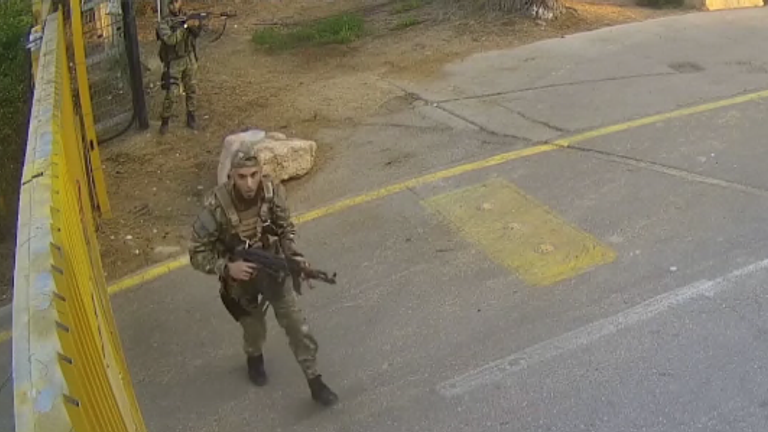
Local officials in Helmand province said the incident took place in Sangin district, leaving four Afghan police officers dead.

Provincial governor spokesman Omar Zwak said the attack was carried out jointly by Pakistani and Chechen militants.

He said clashes started late Monday and the two sides are still exchanging fire.

In the meantime Taliban militants group claimed around 10 police officers along with thier commander were killed.

This comes as Afghan defense ministry on Monday announced that hundreds of Pakistani and foreign militants were deployed to Afghanistan to carry out attacks in Afghanistan.

Defense ministry spokesman Gen. Zahir Azimi said several religious Madrasas teaching Taliban militants were closed and the fighters were deployed in Afghanistan.

Follow Khaama Press (KP)

Bashar al-Assad Complete Interview In Argentinian News, CLARIN

Bashar al-Assad, Syrian leader: “Quitting would flee the people decide if I stay, not U.S.”

clarin NEWS ARGENTINA

By Marcelo Cantelmi

In the interview with Clarin refused to step down to end the crisis. He denied using chemical weapons is repression and questioned the figure of 70,000 dead giving the UN.

VIDEO LINK

Bashar Al Assad, President of Syria, interviewed by Clarin in Damascus. By Marcelo Cantelmi

Damascus. 

Bashar al-Assad, Syria’s strongman, has a calm look that clashes with the site that he has had in history. Or maybe not calm it also seems that look trapped in amazement continues. In this extensive interview, the first since the start of the war with half Hispanic, Assad looked that way to negate any possibility of resigning, reports of use of chemical weapons and to the figure of 70,000 dead UN complaint. The story was made ​​into a library of his palace in Damascus while listening to the distance the muffled sound of exchange of artillery and mortars shot.
- Why the Syrian crisis has spread and deepened as happened in another Arab country?
-Multiple internal and external elements have contributed to the crisis, the most important is external intervention, then, because the calculations of the countries who wanted to intervene in Syria were miscalculations. Those states believed the plan could end in a matter of weeks or months, but this did not happen, what has happened is that the Syrian people have endured and continue to do so. For us it comes to defending our country.

- Do you know that according to the UN this war has caused more than 70,000 deaths?
-Would have to ask those who raise these figures the credibility of their sources. All death is horrible, but many of the dead are speaking foreigners who came to kill the Syrian people. Nor can we forget that there are many Syrians missing. What is the number of Syrians killed, and which of foreigners? How many are missing? We can not give a precise figure. Of course this changes constantly because terrorists and sometimes kill their victims buried in mass graves.

- Discard there may have been excessive force disproportionately, by their troops in the repression?
– How could you determine whether there has been excessive force or not? What is the formula? It is not objective to talk about it. One responds by type of terrorism facing. At the beginning it was domestic terrorism and then came outside which led to the sophistication of the weapons they brought. The debate here is not the amount of force used or the type of weapon but the volume of terrorism we suffer with the consequent duty to replicate.

- Was not there at the start of the crisis the possibility of achieving a dialogue to avoid this outcome?
-At the start were reformist demands, but that approach was apparent, it was a facade a camouflage to make it happen as a matter of reform. We have made reforms … we changed the Constitution … change the laws … we canceled the state of emergency and announced a dialogue with the opposition forces, but at every step we took was increased terrorism. The logical question here is: what is the relationship between terrorism and reformism?

- How do you respond?
-Terrorism can not be the way of reform. How does a terrorist Chechen with reforms in Syria? How does a terrorist came from Iraq, Lebanon or Afghanistan with the reforms in Syria? Lately there have been about 29 nationalities fighting in Syria … What is the relationship between them and internal reformism? This is illogical. As for us, I say we have done renovations and now we have a policy initiative that includes dialogue. The basis of any political solution is what the Syrian people want, and this will govern the polls. No other way. On terrorism, nobody wants to talk with a terrorist. Terrorism hit U.S. and Europe, but no government spoke with the terrorists. One dialogue with political forces, but not with a terrorist beheads, kills and uses chemical gases.

-You claim the foreign military presence in Syria, but also ensures that no Hezbollah fighters and Iran.
-Syria, with its 23 million inhabitants, does not need human support of the country it is. We have military and security forces. We do not need Iran or Hezbollah for that. We have fighters from outside Syria. There are other people here but from Hezbollah and Iran before the crisis they have come to Syria.

-Among those reforms of the Constitution which says, are contemplated unrestricted freedom of the press?
-Maybe you know that a new press law that was enacted a package of laws …

-No
-We have a title match is bigger than dialogue with political forces. This dialogue would lead to a Constitution that requires a referendum of the people. This Constitution will give greater freedoms. The laws are based on the new constitution and it is obvious that political and media freedoms collected. But one can not speak of freedom of the press with no political freedom in general.

- How does the conference on Syria scheduled for later this month by Russia and the U.S.. States?
-We received good Russian-American rapprochement, and we hope to set an international meeting to help the Syrians. But do not think that many Western countries actually want a solution in Syria. We do not believe that many of the forces that support terrorists want a solution. We support and applaud this effort, but we must be realistic. There can be no unilateral solution in Syria, it takes two sides at least.

- Are the forces that oppose or great powers who do not want a solution?
-In practice these opposing forces are linked to foreign countries and therefore have no choice. They live on what comes from outside, receive funds and do what they choose those countries. Both are the same thing and it is they who said they do not want dialogue with the Syrian state, the last time last week.

-When dialog speaks to whom concerns of the other side?
-We chose to talk with anyone who wants to talk, without exception. As long as Syria has free and sovereign decision. But this does not include terrorists, no state dialogues with terrorists. When they lay down their arms and go to the dialogue we have no problems. Believing that a political conference stop terrorism on the ground, is unreal.

- What is the likelihood that dialogue includes those external forces such as the U.S., for example, that supposedly support these people (terrorists)?
-We have said from the start that dialogue with any force in the country or abroad, provided they do not wield weapons. This is the only condition. We have not put conditions for dialogue. Even there are forces that are looked for justice, but we have not taken any action against anyone to leave room for the dialogue and to listen to everyone. The Syrian people will decide who is patriotic and who is not. We never said we wanted a solution that best suits the government, do not expose what we think it would be better. We have made the solution to the Syrian people.

-With regard to the international conference …
-For us the basic aspect to be addressed in any international conference is to stop the flow of money and weapons to Syria and stop sending terrorists who come from Turkey and funded Qatari and other Gulf states such as Saudi Arabia. While there are countries like Qatar and Turkey who have no interest in stopping the violence in Syria or in a political solution, terrorism will continue.

- Where puts Israel in this crisis?
-Israel supports two-way directly and terrorist groups, given logistical and instructs them on how and which sites to attack. For example they attacked a radar air defense system that detects any aircraft that comes from abroad, especially Israel.

-If shifted forward in dialogue, do you foresee a schedule of delivery of arms by the opposition?
-They are not a single entity, are groups and bands, not tens but hundreds. They are a mix, each group has its local leader. There are thousands who can unite thousands of people? This is the question. We can not talk of a calendar with a part we do not know who he is. When they have a unified structure then give you an answer to this question.

- Would you give a step back for a final solution? Are you willing to give up?
-My stay or not depends on the Syrian people. Not my personal choice to stay or go. It’s the people. If you want you stay, if you leave. The issue depends on the constitution of the polls. In the 2014 elections the people will decide.

He has raised the alternative that you resign as a condition of closing the conflict.
‘I’m an elected president and is the people who choose my stay. Now, someone says that the Syrian president must leave because the U.S. want it or because the terrorists asked, is inadmissible.

-Barack Obama has signaled that his country considers intervene but his chancellor, John Kerry has said that any progress should include you exit from office.
-I do not know if Kerry or another have received a mandate from the Syrian people to speak on behalf of this people, about who should go and who should stay. We have said that any decision regarding reforms in Syria or Syrian political action are decisions and is not permitted or U.S. or any other state to intervene in them. We are an independent, not accept that no one define what we need to do, nor the U.S. or anyone. Thus this probability is determined by the Syrian people. You go to elections, is a candidate and is a chance to win or not. Then you can not go to that conference and decide on something that the people have not decided. Another aspect: the country is in crisis and when the ship is in the midst of the storm, give it away, then the captain does not flee. The first is to deal with the storm, return the boat to the right place and then decide things. I’m not a person who shuns responsibility.

-France, Britain and Kerry himself claimed that his army used chemical weapons, sarin, against the civilian population …
‘We must not waste our time with these statements. Chemical weapons are weapons of mass destruction. They say the use in residential areas. If a nuclear bomb was dropped on a city, and the balance was ten or twenty people, do you believe me? The use of chemical weapons in residential areas means killing thousands or tens of thousands in minutes. Who could hide such a thing?

- What do you attribute this complaint then?
-When raised the issue of chemical weapons did when terrorist groups used them in Aleppo in Khan al-Assal about two months ago. We have collected the evidence: the missile and chemicals used. We analyze these substances and send a letter to the Security Council to send a verification mission. U.S., France and Britain were in an embarrassing situation and said they wanted to send a mission to investigate chemical weapons in other areas where allege they were used. They did not to investigate where actual event occurred. A member of the commission, Carla del Ponte, announced that terrorists are those who use chemical weapons but neither the UN paid attention to that statement.

- Do you think that this claim could pave the way for militiar intervention in Syria?
-If this matter is used as a prelude to a war against Syria is likely. We do not forget what happened in Iraq where were the WMD of Saddam Hussein? West lies and falsifies to unleash wars, is his wont. Of course any war against Syria will not be easy, there will be an excursion. But we can not rule out the possibility to launch a war.

- On what basis?
-This was already part of Israel (the bombing). Force is likely especially after we hit that armed groups in many parts of Syria. Then these countries asked Israel to do this to boost the morale of terrorist groups. We assume that at some point there will be some kind of even limited intervention.

-You say that control the situation but as we speak, hear the roar of artillery on the outskirts of the city.
-The term control or not control is used when there is a war with a foreign army. But the situation is totally different. Terrorists penetrate scattered areas, and fleeing from one place to another. There are vast areas where they move and it is obvious that no army in the world can be on every corner.

- Do you really think the Americans cooperate with Qatar and Saudi Arabia to seize power ultraislámico Wahhabi regime in Syria?
-The West only cares about governments that are loyal. They want a government subservient to do what they want regardless of form. But what happened in Afghanistan refutes that. They supported the Taliban and 11-S paid a high price. The danger of this is that states want to spread Wahhabi extremist thought in the whole population and in Syria we have a moderate Islam and will resist it by all means.

-In the 2014 presidential election will there be international observers and allow free access to the world’s press to cover the event?
-To be honest, the issue of observers is a decision of the country as a part of the people can not tolerate the idea that this monitoring is a matter of national sovereignty. And we have no confidence in the West for the task. If observers agree that there will be such friendly countries as Russia or China for example.

- China?
- …
-In the interview made ​​Clarin in Buenos Aires, said firmly rejecting the idea of denying the Holocaust as Iran claims, do you keep that position?
-I wonder why not talk about the Holocaust and what is happening in Palestine, the million and a half Iraqis killed. The Holocaust is a historical question that needs a comprehensive vision and not be used as a political issue. I’m not a researcher to determine the exact history of this subject. The historical questions depend on who writes them, so the story is distorted at times.

- Excuse me, but there is some criticism that you make?
-It is illogical to be self-critical when it comes to events integers. If you see a film criticism before the end. When the frame is complete will do or not to criticize.

-Finally, do you have information on the whereabouts of journalists James Foley, an American missing for six months here, and Italian Domenico Quirico of La Stampa, lost about a month ago?
-There are journalists who entered Syria illegally in areas where terrorists are active. There have been cases where military troops have been able to release journalists who were kidnapped. In any case where we have information on any journalist who entered illegally, we will pass on to the country concerned. And so far we have no information about the two men vides journalists you.

MOSSAD Site Reports Rebel Smuggling Center Falls To Govt. Forces, Wall St. Claims Battle for Qusayr Ongoing

Syria Sweeps Into Rebel Stronghold

[image] Associated Press

Syrian rebel fighters on Sunday gather in Qusayr, near Homs, in an image provided by Qusair Lens and authenticated by the Associated Press.

DAMASCUS—Syrian government forces, backed by members of Lebanese militant group Hezbollah, launched a sweeping operation Sunday to capture a rebel stronghold near the Lebanese border, according to Syrian state media and activists opposed to the regime.

Taking the town of Qusayr, southwest of the city of Homs, would bolster recent gains by regime forces in central Syria and around the capital, Damascus. It also could further embolden Syrian President Bashar al-Assad, who told an Argentine newspaper over the weekend that his fate would be decided in elections scheduled for next year.

Mr. Assad’s remarks complicate the renewed U.S.-Russian push for a political settlement to end the more-than-two-year civil war in Syria. Rebels and their Western and Arab backers insist any settlement must be predicated on Mr. Assad relinquishing power.

Underscoring the depth of the rift in Syria, regime supporters cheered the military operation in Qusayr, with some Assad loyalists openly calling for the government to storm rebel enclaves around the country, even if that means killing large numbers of civilians.

Mr. Assad’s opponents accused the regime of carrying out a sectarian agenda in Qusayr.

Government forces had cordoned off Qusayr on Sunday and were waging street battles against rebels on multiple fronts, Syrian state television reported. Syrian army officers in Qusayr told state TV that soldiers had taken over several government buildings in the town’s southern half, including the local municipal building, where the rebel flag was brought down and the Syrian flag hoisted in its place. That couldn’t be independently verified.

“We have crushed more than 70 terrorists,” said one army officer. “God willing, Qusayr will be liberated in the coming hours or days.”

The rebels in Qusayr, who are estimated by Hezbollah to number about 5,000 and whose ranks include foreign fighters and extremists, denied the government’s claims.

However, rebels said the town was being subjected to one of the most intensive bombardments by regime forces to date.

The U.K.-based Syrian Observatory for Human Rights said on Sunday that at least 52 people—all but four of them rebel fighters—have been killed so far in the offensive, which started late Saturday night with several airstrikes and a barrage of artillery and rocket fire.

Syrian government forces and Hezbollah fighters have been tightening their siege of Qusayr since mid-April. About 10 days ago, the Syrian regime dropped leaflets on the town telling fighters to surrender and civilians to evacuate.

An activist identified by the channel as Abu al-Hoda al-Homsi, speaking from Qusayr, told the Al Jazeera TV channel that about 40,000 civilians remained in Qusayr. Al Jazeera is owned by Qatar, a principal backer of the Syrian rebels.

[image]

Al Jazeera broadcast what it said was footage from inside Qusayr showing the body of a fighter wearing an ammunition vest in the back of a truck and the bodies of bearded military-age men at a field hospital, shrouded in white sheets and being readied for burial in accordance with Islamic traditions. The footage showed parts of the town engulfed in black smoke, as explosions and gunfire are heard in the background.

It is unclear how many civilians remain in Qusayr and whether the figure given by opposition activists is accurate. Before the start of the conflict, Qusayr was home to about 60,000 people, mostly Sunni Muslims and Christians. Almost all the Christians, who numbered about 10,000, fled in early 2012 after rebels belonging to the country’s Sunni majority clashed with Christian families supporting the regime. Hundreds of Sunni families also left the town, many going to neighboring Lebanon, said international aid workers in Lebanon.

Last year, Sunni rebels started attacking Alawites and Shiite minorities inhabiting the farming villages around Qusayr, and this year, rebels openly vowed to “cleanse” the area of the two groups. Alawites, who belong to an offshoot of Shia Islam, dominate the Assad regime.

In April, the Iran-backed Lebanese militant group Hezbollah took over at least 14 villages around Qusayr and said it would defend Mr. Assad against what it called a conspiracy by Israel, the U.S. and Sunni Arab dynasties in the Persian Gulf.

Hezbollah has said nothing about its role in the current battle in Qusayr. A senior fighter with the group and residents of border towns and villages in Lebanon told The Wall Street Journal at the end of April that Hezbollah had been instrumental in planning for Qusayr’s takeover. U.S. officials estimate there are 2,000 to 2,500 Hezbollah fighters in Syria.

Sectarian animosities in places like Qusayr have significantly added to the brutality of the conflict in Syria.

Some regime loyalists are urging government forces to replicate what they did this month when they swiftly stormed pro-rebel enclaves on the country’s Alawite-dominated west coast. The government said it had targeted terrorists. Activists said they documented the executions of at least 205 people, many of them civilians.

In his interview with Argentine daily Clarín, published on the newspaper’s website Saturday, Mr. Assad likened Syria to a ship adrift in a stormy sea and himself to a captain steering it to safety. Mr. Assad, who still enjoys popular support, particularly among Syria’s minorities, said his fate wouldn’t be decided at peace talks the U.S. and Russia are trying to convene in Geneva between the regime and the opposition.

“I am not a person who abandons responsibility,” he said, according to a transcript of the interview released by the Syrian Ministry of Information.

“I am a president elected by the people, and only the Syrian people will decide whether I stay or leave, and the ballot box is the referee,” said Mr. Assad.

He warned against foreign intervention in Syria by countries backing the rebels, including the U.S. “They know it won’t be a picnic,” he said.

Write to Sam Dagher at sam.dagher@wsj.com

Qusair Lens/Associated Press

Syrians inspected the rubble of damaged buildings due to government airstrikes in Qusayr.

“We have crushed more than 70 terrorists,” said one army officer. “God willing, Qusayr will be liberated in the coming hours or days.”

The rebels in Qusayr, who are estimated by Hezbollah to number about 5,000 and whose ranks include foreign fighters and extremists, denied the government’s claims.

However, rebels said the town was being subjected to one of the most intensive bombardments by regime forces to date.

The U.K.-based Syrian Observatory for Human Rights said on Sunday that at least 52 people—all but four of them rebel fighters—have been killed so far in the offensive, which started late Saturday night with several airstrikes and a barrage of artillery and rocket fire.

Syrian government forces and Hezbollah fighters have been tightening their siege of Qusayr since mid-April. About 10 days ago, the Syrian regime dropped leaflets on the town telling fighters to surrender and civilians to evacuate.

An activist identified by the channel as Abu al-Hoda al-Homsi, speaking from Qusayr, told the Al Jazeera TV channel that about 40,000 civilians remained in Qusayr. Al Jazeera is owned by Qatar, a principal backer of the Syrian rebels.

[image]

Al Jazeera broadcast what it said was footage from inside Qusayr showing the body of a fighter wearing an ammunition vest in the back of a truck and the bodies of bearded military-age men at a field hospital, shrouded in white sheets and being readied for burial in accordance with Islamic traditions. The footage showed parts of the town engulfed in black smoke, as explosions and gunfire are heard in the background.

It is unclear how many civilians remain in Qusayr and whether the figure given by opposition activists is accurate. Before the start of the conflict, Qusayr was home to about 60,000 people, mostly Sunni Muslims and Christians. Almost all the Christians, who numbered about 10,000, fled in early 2012 after rebels belonging to the country’s Sunni majority clashed with Christian families supporting the regime. Hundreds of Sunni families also left the town, many going to neighboring Lebanon, said international aid workers in Lebanon.

Last year, Sunni rebels started attacking Alawites and Shiite minorities inhabiting the farming villages around Qusayr, and this year, rebels openly vowed to “cleanse” the area of the two groups. Alawites, who belong to an offshoot of Shia Islam, dominate the Assad regime.

In April, the Iran-backed Lebanese militant group Hezbollah took over at least 14 villages around Qusayr and said it would defend Mr. Assad against what it called a conspiracy by Israel, the U.S. and Sunni Arab dynasties in the Persian Gulf.

Hezbollah has said nothing about its role in the current battle in Qusayr. A senior fighter with the group and residents of border towns and villages in Lebanon told The Wall Street Journal at the end of April that Hezbollah had been instrumental in planning for Qusayr’s takeover. U.S. officials estimate there are 2,000 to 2,500 Hezbollah fighters in Syria.

Sectarian animosities in places like Qusayr have significantly added to the brutality of the conflict in Syria.

Some regime loyalists are urging government forces to replicate what they did this month when they swiftly stormed pro-rebel enclaves on the country’s Alawite-dominated west coast. The government said it had targeted terrorists. Activists said they documented the executions of at least 205 people, many of them civilians.

In his interview with Argentine daily Clarín, published on the newspaper’s website Saturday, Mr. Assad likened Syria to a ship adrift in a stormy sea and himself to a captain steering it to safety. Mr. Assad, who still enjoys popular support, particularly among Syria’s minorities, said his fate wouldn’t be decided at peace talks the U.S. and Russia are trying to convene in Geneva between the regime and the opposition.

“I am not a person who abandons responsibility,” he said, according to a transcript of the interview released by the Syrian Ministry of Information.

“I am a president elected by the people, and only the Syrian people will decide whether I stay or leave, and the ballot box is the referee,” said Mr. Assad.

He warned against foreign intervention in Syria by countries backing the rebels, including the U.S. “They know it won’t be a picnic,” he said.

Write to Sam Dagher at sam.dagher@wsj.com

Qatar’s Devious Plan To Purchase Legitimacy for Radical Islamists

Critics allege Doha’s short-term goal is to prop up Brotherhood ahead of elections

  • Zawya
  • Gulf News

Cairo: Qatar, a tiny country which has wielded oversize influence in revolutions across the Middle East, is now at the centre of a battle for clout in the region’s traditional military and political juggernaut, Egypt.

On May 9, Qatar released $3 billion (Dh11.01 billion) in low-interest loans to Egypt, the latest in a total of $8 billion in assistance it has provided in the past two years to Cairo’s Muslim Brotherhood-led government.

The move, which the government didn’t announce, was confirmed by a central bank official.

While many Egyptians are grateful for the cash, some worry that Qatar’s support of Egypt’s Islamist-leaning government marks Qatar’s latest attempt to gain influence in the region. Such suspicions have fuelled Qatar flag-burnings in Egypt in recent weeks — protests echoed by rallies in Libya, Tunisia and the Palestinian territories against Qatari meddling.

Humanitarian dimension ‘key
element of foreign policy’

gulf-times

“HE Minister of State for Foreign Affairs, Dr Khalid bin Mohamed al-Attiyah said yesterday that the “humanitarian dimension” represented “an important and essential aspect” in Qatar’s foreign policy….Qatar’s foreign policy had emerged from “the visions of the wise leadership of HH the Emir Sheikh Hamad bin Khalifa al-Thani and HH the Heir Apparent Sheikh Tamim bin Hamad

He pointed out that Qatar’s foreign policy formed from the basic principles “of the State of Qatar through its national heritage pursuant to the national values” and principles of the Islamic religion.”

Qatar National Vision 2030

Qatar National Research Strategy 2012   http://www.qf-research-division.org/QNRS_2012.pdf

‘Qatar needs 7,000 researchers to achieve its goals’

Karzai Makes Another Pilgrimage To India In Search of Stronger Defense Ties

Hamid Karzai to visit India; Afghanistan looks for enhanced defence ties

ndtv

Press Trust of India

Hamid Karzai to visit India; Afghanistan looks for enhanced defence ties

Hamid Karzai

New DelhiAhead of its President Hamid Karzai’s visit to New Delhi from May 20, Afghanistan today said it was looking for enhanced defence cooperation with India, from where it was expecting supply of lethal and non-lethal military equipment.

Afghan President Hamid Karzai will visit India on May 20-22 during which he will apprise the Indian leadership of the recent developments in the war-torn country, Afghanistan Ambassador to India Shaida M Abdali told reporters in New Delhi.

The two sides will discuss a range of issues of mutual concern and interest and will discuss cooperation at a “critical time” for Afghanistan, from where NATO combat troops are withdrawing, the envoy said.

The attempt will also be to think ahead with a shared vision, to meet the common challenges and achieve the common goals, Abdali said, adding “It is a critical time for all of us and we need to do more than what we are doing right now.”

Asserting that “India is dispositioned to play a leading role in the entire region for peace and economic development,” the envoy made a strong pitch for enhanced defence cooperation between the two countries.

“Training is most welcome. Other assistance in small stages is most welcome…..but we would like to go beyond the current trend of co-operation between the two countries in the defence sector,” he said.

Asked as to what kind of defence assistance Afghanistan was looking at from India, the Ambassador said, “The partnership agreement does not distinguish between lethal and non-lethal. We have talked about security and defence cooperation, this does not exclude lethal and non-lethal assistance to Afghanistan.

“So, we would like to have both lethal and non-lethal assistance to our defence forces in Afghanistan.”

The Afghan envoy also welcomed the recent commitment of upgrading strategically important Chabahar port in Iran which would help India get access to the land-locked and resource- rich countries. An estimated USD 100 million is required for the modernisation of the port.

“We would like to see the conclusion of the agreement on the Chabahar port. We are very happy that this is gathering momentum. We hope that we sign the trilateral trade agreement among India, Afghanistan and Iran as quickly as possible. We are optimistic after Indian minister Salman Khurshid’s visit to Iran,” the Afghanistan envoy said.

Abdali also noted that 90 per cent of the transition process in Afghanistan was complete and in a few months’ time, the entire process will be over.

“But that does not mean that Afghanistan will be totally on its own. Afghanistan will carry on within its institutional capacity but the supporting role will be there from our international allies, more important from the region and from India,” he said.

Asserting that India was “critically important” to Afghanistan, he said it needs to be apprised of the situation in Afghanistan.

“Investment in the security of Afghanistan is in India’s interest to prevent spillover effects of terrorism on Afghanistan,” he said.

“We are happy that India is playing a fundamental role in connecting the region and we would like India to adapt a more result-oriented role,” Abdali said.

During the visit, President Karzai will be conferred with an honorary doctorate degree from the Lovely Professional University in Jalandhar and will address the graduating students of the University, the statement said.

“The visit of a head of a state (twice) within six months signifies the importance of the relationship between the two countries…he was here last year in November and again next week that means that the relationship is very strong and very, very deep,” Abdali said.

Afghanistan and India signed a comprehensive Strategic Partnership Agreement (SPA) in October 2011. The SPA serves as the foundation of the two nations expanding bilateral relationship in multiple sectors, including security and defence cooperation, as well as cultural and people-to people cooperation.

Abdali said the agreement with India was also the basis of agreements with other countries.

Karzai’s visit was an integral part of regular bilateral consultations, reviewing the achievements of the two countries so far and prioritising issues of top interest and concern to the two sides, in light of the impending withdrawal of NATO forces from Afghanistan, he said, asserting that Afghanistan’s relationship with India should not be looked from Pakistan angle.

“We are two independent nations and are independent in the pursuit of our common goals,” he said.

No use of terrorism as a means, adhering to Afghanistan’s constitution and renouncing violence are a prerequisite for the Taliban to join the political process, Abdali said, replying to a question on the possibility of the Taliban joining the mainstream.

Talking about America’s role after 2014, the envoy said, “Afghanistan will require assistance for years. We are not concerned about the number of US troops that will stay back post-2014, but with the substance of America’s assistance.”

“The framework of partnership agreement (with the US) is there. We need their sustainable assistance to the national security forces,” he said.

About the role of Russia and China in Afghanistan, the envoy said, the region as a whole is very important.

“Both China and Russia are big powers and we are happy that India is taking the lead in engaging with them,” Abdali said.

To a question on regional players, who may bring their rivalries to Afghanistan, the envoy said, “We are looking at the positive side of the engagements.”

Coming together can create a win-win situation for the regional countries from a zero-sum game they have been engaged in over the years, he said.

“It is high time for the region to wake up and take up the fate in its own hands,” Abdali said.

“We are concerned with the border situation and maintaining of status quo is essential,” the envoy said when asked if Afghanistan was concerned over Nawaz Sharif’s win and the rise of Imran Khan’s party in Kyber Pakhtunkhwa in Pakistan polls, as both were considered close to extremist parties.

“The visit has no relation to any other country,” Abdali added.

“We are concerned about the continuance of terrorism as a means. Afghanistan has come out of 12 years of reconstruction.

It will have a different relationship with all nations,” Abdali said.

“Biggest challenge for us is security. In the context of partnership agreement with India, we have done a lot. The training of army and police is a necessity. But given the time we are in right now, we are required to go beyond, we are required to sit down and look at the common cause which is self-defence,” he said.

“It is critically important that the two countries cooperate on deeper and more substantial issues beyond training,” he added.

“We are very happy with the assistance from India in the last few years, but still there is scope to do more for a common cause of a peaceful and secure Afghanistan and a peaceful and secure India beyond 2014,” he said.

Asked about Sharif’s statement that he will allow transit trade route from Afghanistan to India, the envoy said, “This is exactly what we have desired all these years. We are happy that positive statements have been made in this regard.”

“We need to have a conducive environment for trading. We hope this will be realised in future,” he said.

Putin’s “Red-Line”–Defended With “Carrier-Killers” For Syria and A Dozen Russian Warships Permanently Stationed Along the Coast

[SEE:  Syria crisis: Russia 'sends sophisticated weapons']

“Russia has sent sophisticated anti-ship missiles to Syria, US media report.

The New York Times quotes unnamed US officials as saying the missiles could be used to counter any potential future foreign military intervention in Syria.”

P-800 Yakhont missile (1997)  Russia signed the deal to supply Syria with Yakhont missiles in 2007
VIDEO FOOTAGE OF YAKHONT LAUNCH

[SEE: The Indian/Russian Mach 3 Carrier-Killer Missile]


VIDEO FOOTAGE OF BRAHMOS LAUNCH

Yakhont… yahont2  Brahmos2 ..Brahmos

Russia Raises Stakes in Syria

Wall St. Journal

Assad Ally Bolsters Warships in Region; U.S. Sees Warning

By ADAM ENTOUS and JULIAN E. BARNES in Washington and GREGORY L. WHITE in Moscow

Russia expands its naval presence near a key base in Syria in a build-up that U.S. and European officials say appears aimed at deterring intervention in the country’s increasingly bloody civil war. Photo: Getty Images.

Russia has sent a dozen or more warships to patrol waters near its naval base in Syria, a buildup that U.S. and European officials see as a newly aggressive stance meant partly to warn the West and Israel not to intervene in Syria’s bloody civil war.

Russia’s expanded presence in the eastern Mediterranean, which began attracting U.S. officials’ notice three months ago, represents one of its largest sustained naval deployments since the Cold War. While Western officials say they don’t fear an impending conflict with Russia’s aged fleet, the presence adds a new source of potential danger for miscalculation in an increasingly combustible region.

“It is a show of force. It’s muscle flexing,” a senior U.S. defense official said of the Russian deployments. “It is about demonstrating their commitment to their interests.”

The buildup is seen as Moscow’s way of trying to strengthen its hand in any talks over Syria’s future and buttress its influence in the Middle East. It also provides options for evacuating tens of thousands of Russians still in Syria.

The deployments come at a time of heightened tensions. U.S. officials said Thursday that another round of Israeli airstrikes could target a new transfer of advanced missiles, anti-ship weapons known as Yakhont missiles, in the near future. Israeli and Western intelligence services believe the missiles, which have been sold by Russia to Syria in recent years, could be transferred to the militant Hezbollah group within days. Russia has strongly protested previous Israeli strikes in Syria.

Yakhont missiles are an offensive system. Moscow has told Western diplomats it will supply only defensive weaponry to the Syrian regime. But U.S. and Israeli officials have long been worried about Syria’s existing stocks of the weapon. If transferred to Hezbollah or other militant groups, they could provide a serious threat to both Israeli and U.S. warships in the region.

image

Russian Navy and foreign ministry officials didn’t respond to requests for comment about the deployments of the warships.

Russia supports Syrian President Bashar al-Assad, while the U.S. has called for his removal. Russian President Vladimir Putin signaled this week that he is pushing ahead with the sale of an advanced air-defense system to Syria, according to U.S. intelligence reports, over Israeli and U.S. objections.

Hezbollah and its chief sponsor, Iran, also have rallied around Mr. Assad, sharing Russia’s interest in keeping the regime in place. Recent Israeli airstrikes inside Syria have targeted missiles believed to be bound from Tehran to Hezbollah, Western intelligence officials have alleged.

Moscow and Washington have worked publicly in recent days to assemble an international conference involving Damascus. But expectations are low that the meeting could lead to a political transition, as tensions have heightened around the region, and with the U.S. and Russia backing opposing camps.

Amid the strategic turmoil, U.S. and European defense officials say Russia appears to be trying to project power to deter outside intervention in Syria, which it sees as its foothold in the Middle East.

U.S. and European officials believe Mr. Putin wants to prevent the West from contemplating a Libya-style military operation inside Syria. President Barack Obama doesn’t want to intervene militarily, but he has said the calculation could be changed by suspected use of chemical weapons by Mr. Assad’s forces. Likewise, the Pentagon has stepped up military contingency planning in the event of spillover of fighting into neighboring Turkey and Jordan, both close U.S. allies.

Moscow’s deployments appeared designed to show that Russia intends to keep Tartus, its only remaining military outpost outside the former Soviet Union, senior U.S. officials said. Though spare by Western military standards—it consists of a pair of piers staffed by about 50 people, according to Russian data—the base provides a toehold in the region that has grown in strategic and symbolic importance for Moscow.

“It’s not really a base,” said Andrei Frolov, an analyst at CAST, a Moscow military think tank. “It’s more like a service station” that can do limited resupply and very modest repairs.

U.S. officials say, however, that Russia has drawn up plans to expand the base, which it negotiated with Mr. Assad.

Washington’s interest in the base has likewise grown—not because the U.S. sees it as a threat, but because U.S. officials believe that by assuring Russia that the base will remain under Moscow’s control in a post-Assad Syria, the U.S. has a better chance of convincing Mr. Putin to break with Mr. Assad.

Mr. Obama held out some hope Thursday that the coming conference with Russia would help the major powers reach a consensus on how to end the bloodshed in Syria.

“There’s no magic formula for dealing with an extraordinarily violent and difficult situation like Syria’s,” Mr. Obama said at a news conference in Washington with Turkish Prime Minister Recep Tayyip Erdogan. “I do think that the prospect of talks in Geneva involving the Russians…may yield results.”

Moscow’s diplomacy notwithstanding, U.S. officials believe that in addition to the naval deployments, Russia is moving more quickly than previously thought to deliver S-300 surface-to-air defense systems to Syria.

U.S. officials say the S-300 system, which is capable of shooting down guided missiles and could make it more risky for any warplanes to enter Syrian airspace, could leave Russia for the port of Tartus by the end of May.

Russia’s delivery of such missiles could create a new dilemma for Israel, which has carried out what Western intelligence officials say are at least three airstrikes inside Syria in recent months against suspected weapons shipments to Hezbollah. Israel has yet to target Syrian forces directly, seeking to avoid direct conflict with Mr. Assad, say U.S. and Israeli officials.

Russian officials first announced the navy was deploying ships to the eastern Mediterranean near Syria starting in late 2012, but few details about the deployments have been made public.

In January, the Russian navy used these and other ships to conduct what it billed as some of the largest exercises in recent years in the eastern Mediterranean and Black Sea for a force that has had relatively low international presence since the Cold War. State media reported that as many as 21 ships and three submarines were involved, as well as planes and other forces.

Before the start of the Syrian civil war, Russian ships stopped at the port only irregularly. But in the last three months, 10 to 15 Russian ships have been near the Syrian port at any one time, U.S. and European officials say. They say Russia currently has 11 ships in the eastern Mediterranean, organized into three task forces, that include destroyers, frigates, support vessels and intelligence-collecting ships. Another three-ship group of amphibious vessels is headed to the region. But U.S. officials said they expect that group to replace one of the groups currently in the region.

“You have more and more warships” concentrated between Cyprus, Lebanon and Turkey, a senior European defense official said, adding that Russia is protecting its sphere of influence in the Middle East and “staking its claim” to Tartus.

Many of the Russian ships in the eastern Mediterranean have stopped in Syria, conducted exercises, port visits or training in the area, and then moved on to the Gulf of Aden to conduct counterpiracy missions, U.S. and European officials said. Others in the aging fleet have returned to Black Sea ports for repairs and resupply in recent weeks, Russian state media reported.

The stops in Syria, according to a U.S. official, signal that Russia wants to show it remains a naval power, even though its strength is diminished from the Soviet era and no longer matches Western capabilities.

“They are stretching their legs,” the official said. “They are very much interested in letting people know they are a blue-water navy.”

The Soviets had ships in the Mediterranean during the Cold War whose mission was to counter the U.S. Navy’s 6th Fleet. The Russians ended that mission in 1992. But in the last few months, the Russian navy has talked about reviving a similar mission to signal Russia’s influence in the region.

For now, senior U.S. officials said the Russian buildup “is not seen as threatening” to the U.S. Navy, which has two destroyers in the eastern Mediterranean and an aircraft carrier battle group in the Persian Gulf.

“Nobody is forecasting the battle of Midway in the eastern Med,” the senior defense official said.

Write to Adam Entous at adam.entous@wsj.com, Julian E. Barnes at julian.barnes@wsj.com and Gregory L. White at greg.white@wsj.com

Israel Preparing New Syrian Airstrikes, Warns Assad Against Retaliation of Any Kind

[If, after all the stink that has been raised over the previous Israeli aggressions upon Syria in the midst of the US/Saudi war to destroy Syria, Israeli bombers attack again, and Assad fails to retaliate again, then it will prove some level of Israeli control over Assad (SEE: When the Hummus Hits the Fan, Israel Will Choose Bashar al-Assad Over Radical Islamists).  Such a Zionist revelation, coupled with recent news of an Israeli/Saudi alliance, will also reveal the true Patron/Client relationship between the Fascist Shit-hole and the Arab royal dictatorships, who have been the traditional alleged "protectors" of the rights of the Palestinian people.  The Mideast monarchies have given hope that one day they would avenge the "Nakba" ethnic-cleansing of Palestine by returning millions of refugees back to their rightful homes. 

Such is the nature of the "Bizarro world" that we live in. 

Good always turns-out to be evil in the end.  The power of weakness is a Christian delusion.  When we are meek before the enemies of the human race, then the most bloodthirsty criminals will determine the vile nature of the next step in the spiritual/psychological evolution of mankind.]


Report: Israel warns Assad not to retaliate to airstrikes

Ynet

Israeli senior official tells New York Times Israel considering further military strikes on Syria to stop transfer of weapons to Hezbollah. ‘If Assad reacts, he will risk forfeiting his regime,’ he says

A senior Israeli official signaled on Wednesday that Israel was considering further military strikes on Syria to stop the transfer of advanced weapons to Islamic militants, and warned Syrian president Bashar Assad, that his government would face crippling consequences if it retaliated against Israel, the New York Times reported.

“Israel is determined to continue to prevent the transfer of advanced weapons to Hezbollah . The transfer of such weapons to Hezbollah will destabilize and endanger the entire region,” the official said in an interview.

“If Syrian President Assad reacts by attacking Israel, or tries to strike Israel through his terrorist proxies,” the official said, “he will risk forfeiting his regime, for Israel will retaliate.”

The newspaper noted that the Israeli official has been briefed by high-level officials on the Syria situation in the past two days and had contacted The New York Times on Wednesday.

The paper considered the timing of the statements. “The precise motives for Israel’s warning were uncertain: Israel could be trying to restrain Syria’s behavior without undertaking further military action, or alerting other countries to another strike. That would ratchet up the tension in an already fraught situation in Syria,” the report said.

Foreign reports claim Israel carried out a total of three airstrikes in Syria since the civil war there began two years ago. The first allegedly took place in January when a convoy was bombed near the Syria-Lebanon border.

The target was reported to have been an arms shipment to Hezbollah that included Russian-made SA-17 missiles – possibly “game changing” weapons in the conflict between Israel and Hezbollah. Damascus later conceded there had been an attack claiming the target was a military research center in Jamraya.

The second airstrike allegedly occurred in early May and was reported by US media. The target was an arms shipment from Iran to Hezbollah. Another strike was reported 48 hours later. According to Syria, the Jamraya military center had been bombed again.

Israel did not comment on the reports.

Zionist/Chinese Union Raises Its Ugly Head—China To Build Rail Line for Israel

[China is evidently just another power working to install the Jews on the world throne, leaving the rest of us to serve as their footstool.  If all things shall truly "flow from Jerusalem," then they will be the most corrupt, evil things imaginable.  And all this time we thought that the God of the Hebrew Bible was a God of goodness.  All we have seen "God's Chosen" do so far is to sow hatred and divisioin throughout the earth.  It is a sad reality we must live in when the outcome of all things is to be that good is bad, black is white, humanitarianism is war 

I am really getting sick of reporting this shit!]

zionist china

China’s President Xi Jinping (R) meets with Israel’s Prime Minister Benjamin Netanyahu along with their delegates during a meeting at the Great Hall of the People in Beijing on May 9, 2013. (AFP PHOTO/POOL)

Israel’s railway plan set to boost China’s trade in Middle East, Europe

News Asia

When Israeli Prime Minister Benjamin Netanyahu visited China last week, one of the items on his agenda was a railway line that could turn Israel into a land and sea bridge for Chinese exports to Europe.

TEL AVIV: When Israeli Prime Minister Benjamin Netanyahu visited China last week, one of the items on his agenda was a railway line that could turn Israel into a land and sea bridge for Chinese exports to Europe.

The China-Israel initiative holds the potential to change the face of trade in the Middle East.

Dr Gedaliah Afterman, Fellow at Jewish People Policy Institute, said: “As far as expertise goes, the Chinese have been involved in many similar projects around the world.”

The plan is to build a 180-kilometre railway from Israel’s southern port in Eilat in the Red Sea to its Mediterranean ports in Ashdod and Haifa. From there, cargo can travel onwards to Europe.

Dr Afterman added: “As far as the Chinese interests in such a project, I think it’s both economic, but also strategic. I mean having a connection between the port of Eilat in the Red Sea and the port of Ashdod in the Mediterranean gives  them access to both directions where they can move both energy resources and other cargo.”

The route will be far faster than boats reaching the Mediterranean through the Suez Canal. Now they will be able to by-pass the Suez Canal completely and dock in Eilat.

The railway is expected to increase trade from China, India and other Asian countries to Israel, while also reducing Tel Aviv’s dependence on a waterway controlled by her increasingly hostile neighbour.

One of the big concerns for Israelis is the deterioration in relations between Tel Aviv and Cairo, but by by-passing the Egyptian-controlled Suez Canal, Israelis no longer have to fear that if Cairo ever blocked the canal their economy would come to a standstill.

Dr Shalom Wald, Senior Fellow of the Jewish People Policy Institute, said: “Egypt is a mess. How long will it take for the mess to spill over into the Suez Canal? If the Suez Canal ever closes, it will be a catastrophe to trade and a blow to China also. A lot of Chinese trade goes through the Suez Canal also.”

The idea is not only for a cargo train, but also for one that transports people.

Ms Sivan Shahar lives in Eilat, but works in Tel Aviv. The lengthy commute sees her spending many hours on the road.

“It will be a great relief, it will be a great assistance for me because it will take about two and a half hours each way instead of four hours in a bus ot taking a flight which is always harder,” she said.

The proposed railway line is along a route used in ancient times by caravans from Arabia and India to Europe.

But it’s not without its problems

Dr Asaf Tsoer, ecologist at Southern District Nature and Park Authority of Israel, said: “We need to understand that this train passes through one of our biggest nature reserves in an area that we are protecting and fighting to protect for a very long time. It goes near the natural equators which can only be found in Israel  and in Sinai, and they pass through a lot of archaeological sites.”

Construction is expected to take about five years to complete and will cost about US$4 billion.

There are plans to extend the railway to Jordan’s Aqaba port later.

This is all part of a plan for China to fast track trade into the Middle East and beyond.

- CNA/de

Hezbollah to open ‘new front’ in Golan Heights

[If Hezbollah moves into the Sinai, it will first have to evict the "international terrorists" already located there, reportedly.  Is this the war between "Al-Q" and Hezbollah that all the newsies are predicting?]

Hezbollah to open ‘new front’ in Golan Heights

times of israel

Iran reportedly convinces Assad to let Lebanese group attack Israel from Syrian territory, calls on ‘all Arabs and Muslims’ to unite and join fight

Poster of Hezbollah leader Hassan Nasrallah from 2006 (photo credit: Olivier Fitoussi/Flash90)

Poster of Hezbollah leader Hassan Nasrallah from 2006 (photo credit: Olivier Fitoussi/Flash90)

Iran has convinced Syria to allow Hezbollah to open a “new front” against Israel in the Golan Heights, the London-based Arabic-language newspaper al-Hayat reported Wednesday.

Tehran, seeking to prevent the fall of Syrian President Bashar Assad’s government, asked Damascus if Hezbollah could set up a new military front against Israel in the Golan.

“All Arabs and Muslims” are requested to join the fight against Israel, Tehran said, according to Israel Radio.


The report comes a week after Hezbollah leader Hassan Nasrallah vowed to respond to Jerusalem’s aggression with the help of Syria’s advanced “game-changing” weapons. The next stage, he warned during a public speech, would be opening up a front on the Golan Heights.


The Palestinian newspaper al-Quds also reported Wednesday that Tehran had persuaded Damascus “to open the door to jihad” in the Golan Heights in an effort enable Arab and Muslim fighters to unite and confront Israel, so that they’re “ready” if Israel strikes Syria again.


According to unnamed Israeli and American sources, Israeli planes struck sites outside Damascus twice during the first weekend in May, targeting weapons transfers from Iran to Hezbollah. The Syrian regime warned a few days later that it would retaliate immediately to future Israeli attacks on its soil.


The al-Quds website wrote that Iran also discussed the issue with other Arab leaders, namely Jordan’s King Abdullah, who expressed his own “concerns” about the surge of radical Islamist groups, such as the Jabhat al-Nusra, in Syria.


The Lebanese daily al-Akhbar suggested last week that Iran had “reached a final decision” to respond to Israel’s reported strike on Syria by “turning the Golan into a new Fatah-land. The front has become open to Syrians and Palestinians and anyone who wants to fight Israel.”


A message to that effect was conveyed to Assad by Iranian Foreign Minister Ali Akbar Salehi on behalf of Iran’s Supreme Leader Ali Khamenei, reported al-Akhbar.


Arabic media reports also suggested Syria had allowed Palestinians living there to attack Israel from the Golan Heights. However, Fatah spokesman Amad Assaf dismissed the claim by saying that Palestinians don’t take their orders from the Syrian president, according to al-Quds al-Arabi, another London-based paper.


Earlier this week, the Syrian government announced that it reserves the right to invade the Israeli-held Golan Heights at any time, and accused Jerusalem of violating the terms of the 1974 ceasefire that ended the Yom Kippur War.


During a speech in Damascus, Information Minister Omran al-Zoubi accused Israel of attacking sites near the Syrian capital, allowing rebel groups to operate in the demilitarized zone separating Israeli and Syrian forces on the Golan Heights, and letting those groups kidnap UN observers on multiple occasions.


Meanwhile, Prime Minister Benjamin Netanyahu met with Russian President Vladimir Putin in Moscow Tuesday in what was described as a bid to prevent Moscow from selling the cutting-edge missile defense system, the S-300, to Damascus. Jerusalem fears that the advanced weaponry could fall into the hands of Hezbollah, Syria’s key ally in neighboring Lebanon.


Elhanan Miller and Ilan Ben Zion contributed to this report.

Russia to expel ‘CIA agent’ in spy recruitment scandal

45

CIA agent Ryan Fogle

Video footage and photographs have emerged of the man’s alleged detention, the BBC’s Steve Rosenberg reports

Russia to expel ‘CIA agent’ in spy recruitment scandal

BBC

Russia says it will expel a US diplomat briefly detained in Moscow for allegedly trying to recruit a Russian intelligence officer as a spy.

The diplomat, named as CIA agent Ryan Fogle, was held overnight after he was apparently arrested wearing blond wig.

He has been declared “persona non grata” for “provocative actions in the spirit of the Cold War”, the Russian foreign ministry said on its website.

The US ambassador to Moscow, Michael McFaul, had been summoned, it added.

Mr Fogle is said to have worked as third political secretary at the US embassy in Moscow.

A state department spokesperson said: “We can confirm that an officer at our US embassy in Moscow was briefly detained and was released. We have seen the Russian foreign ministry announcement and have no further comment at this time.”

The diplomat was reportedly arrested with a large sum of money, technical devices and written instructions for the Russian agent he had tried to recruit.

Photos purporting to show Mr Fogle’s detention have been widely circulated in the Russian media.

Delicate diplomacy

The foreign ministry said it had ordered Mr Fogle to leave the country, in a statement posted online on Tuesday afternoon.

“Such provocative actions in the spirit of the Cold War will by no means promote the strengthening of mutual trust,” the ministry said.

The incident creates an uncomfortable atmosphere at a time when the US and Russia are involved in delicate diplomacy over Syria and in taking cautious steps towards defrosting relations, the BBC’s Steve Rosenberg in Moscow reports.

But it is unlikely to have any long-term political consequences, our correspondent says, as both countries know that espionage did not end with the Cold War.

Russia’s Federal Security Service earlier released images allegedly showing Mr Fogle during and after his arrest.

Wearing a blue checked shirt and a plain baseball cap, he was shown being held on the ground with his hands bound, then being escorted away.

Another photo showed him sitting at desk, his hat removed.

Possessions said to be Mr Fogle’s are laid out on a table. They include a sum of money in 500-euro banknotes and two wigs, one of which he was apparently wearing at the time of his detention.

Also on the table are a compass, map, knife, dark glasses and small mobile phone.

“FSB counter-intelligence agents detained a CIA staff member who had been working under the cover of third political secretary of the US embassy in Moscow,” the FSB said.

“At the moment of detention, special technical equipment was discovered, written instructions for the Russian citizen being recruited, as well as a large sum of money and means for altering appearance.”

Still of the items said to have been in Mr Fogle's possession (14 May 2013) Russian officials said they had confiscated a large sum of money, wigs and technical equipment

‘Dear friend’

Russian state TV has displayed a piece of paper, which it said was Mr Fogle’s letter to the Russian officer.

Addressing the recipient as “Dear friend”, the letter offers $100,000 (£65,400) “to discuss your experience, expertise and co-operation”.

It goes on to say: “We can offer up to $1m a year for long-term co-operation, with extra bonuses if we receive some helpful information.

“This is a down payment from someone who is very impressed with your professionalism and who would greatly appreciate your co-operation in the future.”

The letter is simply signed “Your friends”.

The last major espionage case involving the two countries took place in 2010, when 10 people pleaded guilty to spying on the US for Russia.

The alleged agents were deported from the US in exchange for four people the Russians claimed had been spying for the West, in the biggest spy swap since the Cold War.

Last year, a former UK government official admitted that Britain had been caught spying after Russia exposed its use of a fake rock in Moscow to hide electronic equipment.

Shortly after the 2006 incident, Russia introduced tough new legislation on foreign non-governmental organisations (NGOs).

President Vladimir Putin has repeatedly accused Britain, the US and other countries of financing NGOs to meddle in Russian politics.

Last July, he passed a controversial law requiring all NGOs that receive overseas funding to register as “foreign agents”.

Two months ago, Russian security services launched a series of investigations into foreign-funded NGOs, raiding their offices and seizing computers and documents.

The apparent crackdown drew widespread international criticism.


Jordan Salafists Warn Hezbollah Against Advancing To Jordan-Syria Border

Jordan Salafists warn Hezbollah of advancing to Jordan-Syria border

 
ammon news
 

AMMONNEWS – The ultraconservative Salafi Jihadi current in Jordan threatened the Lebanese Hezbollah movement, whose pro-Syrian regime forces are fighting in Syria, from advancing towards the Syrian-Jordanian border.

With over 500 of its members fighting alongside the opposition rebels in Syria, the Salafi Jihadi movement warned the Shiite Lebanese group of any attempts to near the Jordanian border amid the ongoing crisis in the neighboring country.

The movement’s leader Mohammad Shalabi, known as “Abu Sayyaf,” reacted to news reports on Tuesday that Hezbollah fighters are advancing southward in Syria toward Deraa, bordering Jordan, stressing that he was able to confirm the reports through the movement’s contacts inside Syria.

Abu Sayyaf blasted Hezbollah’s leader Hassan Nasrallah, emphasizing in statements to Ammon News on Tuesday that “Nasrallah and the Shiites are delusional if they think that Jordan is like Syria and Lebanon, they will only find flaming fire facing them here.”

Hezbollah forces fighting in Syria are advancing southwards towards the border town of Deraa on the Syrian-Jordanian borders, a source affiliated with Hezbollah said.

Lebanese Shiite movement Hezbollah fighting forces are sent to Syria to fight alongside the Syrian regime’s military, including a comprehensive logistics team from Hezbollah’s Military chiefs of staff that manage the transport, movement, and weapons supplies of the fighters in Syria, the source told the Kuwaiti-based Qabas newspaper.

The source added that Hezbollah fighting units “played a major role” in Syrian Army’s reclaiming of the town of Khirbat Ghazalah, a strategic location on the interstate between Damascus and Deraa, in southern Syria near the Jordanian border.

Bashar al-Assad’s regime forces clashed with rebel fighters near the insurgent-held Qusayr in central Syria on Monday, backed by pro-regime militia and Hezbollah fighters, AFP reported.

Hezbollah repeatedly stressed its support to Assad’s regime, and is backing Syrian forces with fighting units and weapons supplies, particularly in the towns on the Lebanese-Syrian border, in the crisis that has claimed the lives of over 100,000 people and displaced millions.

When the Hummus Hits the Fan, Israel Will Choose Bashar al-Assad Over Radical Islamists

When the Hummus Hits the Fan, Israel Will Choose Bashar al-Assad Over Radical Islamists

Peter Chamberlin

Once again (just as in the recent US Embassy bombing in Ankara) a spectacular terrorist attack takes place in Turkey and the government immediately blames another obscure Marxist terrorist group, that they have conveniently resurrected from Turkey’s distant past.  The individual faction of this group has also allegedly been identified, as “Mirhac Ural,” who has recently been named by the Syrian opposition as the man behind the latest alleged “ethnic cleansing” in a town called Banias, along the Syrian coast (SEE:  Syria: Enter the ethnic cleanser of Banias).

Ural was originally a founding member of TPLP-C (Acilciler), a Marxist/Leftist/revolutionary group which was formed to fight US imperialism within Turkey, specifically, to act as a counter-force to US “Gladio”/”Gray Wolves” operations.  The TPLP-C supported its sister organization, the DHKP/C, which was blamed for the recent bombing outside the American Embassy in Ankara.


Mihraç Ural and Ocalan 2

Ural is also a close friend of terrorist PKK leader Abdullah Ocalan.  He allegedly introduced Bashar al-Assad to Ocalan.  It was allegedly Ural who persuaded Assad to play the “Kurdish” card against Erdogan.  Erdogan thought that he had trumped this move when he negotiated the latest peace agreement with the PKK, until Iraq’s government refused to accept the expatriated Kurdish guerillas.  The Kurds cannot be blamed for using Syrian-based assets against Turkey in this terror bombing in Reyhanli over the denial of new sanctuary in northern Iraq, because the attack was clearly intended to help the Turkish Prime Minister to persuade Obama to intervene in Syria on Turkey’s behalf, and this would not help the Kurds in any conceivable way.

It is claimed in the Saudi/Arab press that Bashar Assad has become desperate in his resistance to the Imperial terrorist invasion, choosing at this time to gather his forces to him in the center of his Alawite home turf, as he ethnically cleansing Syria of the majority Sunnis.  They have reinforced this ethnic cleansing theme in the reports emerging from the Imperial press Turkish outfit, Zaman, about an alleged “Banias massacre.”  This massacre supposedly took place the day after Ural was quoted on YouTube, saying, “We need to cleanse Banias of traitors at the earliest.”

From the video, if it is genuine, it seems that Ural could be a legitimate leader of a Syrian counter-terrorist cell.  If that is true, then he would certainly have plenty of reasons to want to close the supply lines from Turkey.  But there is much more to this incident than this simple explanation.  If Ural is an anti-Islamist fighter, then why would he be immortalized in the Islamist press?  The story about an “Alevi rump state” along the coast of Syria, builds upon Sunni fears that they are about to also be ethnically cleansed from around Hatay, Turkey–Giving them a good reason to fight a sectarian war.  This benefits the Saudi-Israeli alliance, up unto the point where the destabilization plot it increases ethnic tensions on the wrong side of the border.  Proper conflict management prevents the various sub-plots from getting out of control and, as a consequence, over-driving the main destabilization plot and thereby, unintentionally causing the opposite effects, instead of the planned reactions.

Always, in these destabilization plots, there are two primary parties working the target–the destabilizing power and a patsy partner within the target entity (corporation, organization, state) that is to be destabilized.  Since the Saudis and Israel are obviously working together to carry-out the Imperial diktat for the Middle East, then it is clear that it is the Saudis who will eventually be the losing party.  Whether they will lose more than they can afford to pay is the risk that they are willing to take to eject Assad.  It is not in Israel’s interests to see an Islamist victory in Syria, but the Saudis and friends erroneously believe that it is in theirs.  It is unlikely that the Saudis would support an effort to divide Syria if it would harm Turkey, or make it harder to get weapons over the Syrian border to the terrorist front.

If the bombing of Turkey is clearly not in the Islamists’ interests, but does no harm to Israeli interests, then it may mean that Israel is using another PKK-related terror group to rein-in Prince Bandar’s Islamist attack dogs, in order to save Assad, in order to maintain the quagmire in Syria.  Consider the points raised in this piece from Zaman (SEE:  Opposition commander: Assad defeated, we are fighting Iran, Hezbollah).  The Gulenist mouthpiece Zaman interviews an alleged Syrian rebel commander,  of the al-Tawhid Brigade, Commander Abdulkader Saleh.  He makes the extraordinary claim that Israel and Iran are secretly working together against the Syrian terrorists:

“Bashar al-Assad’s regime does not have the strength to carry on its battle against opposition fighters, adding that Iran and Hezbollah are the forces behind the protracted war….Iran and Hezbollah are the ones who are continuing the war in Syria,”  

“Furthermore, Iran and Hezbollah are cooperating with Israel to be able to support Assad. Assad has protected Israel’s border for 40 years,”

The first time I read the Saleh interview, I laughed it all off as nonsense, until I read the article in Foreign Affairs magazine, written by former head of Mossad, Efraim Halevy (1998 to 2002).  He affirmed to the world that Bashar Assad is Israel’s Man in Damascus (or “Why Jerusalem Doesn’t Want the Assad Regime to Fall”).
It is obviously in Israel’s interests to preserve the Assad dynasty, as opposed to the radical, unpredictable Islamists.  It may be impossible to determine the truth about Israeli conniving with Arab leaders until someone makes a big messy mistake.  If there were any honest news sources in the Middle East, then maybe we could figure-out just exactly who has benefitted from Israel’s latest bombings of Syria.  Would the Zionist state really have committed an “act of war” against Syria and Lebanon, just to prevent Hezbollah forces from upgrading a few of their missiles?  Was the Syrian military or government informant/traitor warning Israel about the imminent acquisition of “game-changing weapons” by Hezbollah, or by the Free Syrian Army?
If all of this proves to be true, that Israeli bombers were destroying heavy weapons and killing a lot of Syrian soldiers, in order to keep the weapons out of the hands of Syria’s terrorists, or that Mossad manipulated PKK-related killers to murder more than 40 innocent people in Reyhanli, then what does that say to the rest of the world, which is drowning in despair over the Syrian conflict?   What advantage is there in a Saud/Israeli alliance, when the Israelis are there to play the part of “spoiler” to all of the Islamist plans?  Above all else, Mossad/Israeli objectives are constant and unwavering, to establish Jewish dominance over every square inch of the Middle East, as a stepping stone to Jewish world dominance.  This justifies the spoiler role for Israel, support the Goyim’s plans, until the advantage shifts to Jewish interests, at which time all partners are double-crossed.  

the Saudi Gazette (SEE: Israel’s strategy in Syria ).

“But the bigger threat to Israel is the growth of democracy in the Arab world. If the Arab world were ever to become a democracy, it would expose Israel as the democracy fraud that it is.

Israel fears the Arab Spring because the Arab Spring augments the voices of freedom and calls for freedom throughout the region, not just in the Arab world, but in Israel too. And Israel is one of the most oppressive country’s in the Middle East. Although most Jewish citizens of Israel enjoy unprecedented freedoms and benefits from the state, non-Jews suffer simply because they are non-Jews. Christian Arabs and Muslim Arabs are victimized by Israel both as so-called “citizens” and as imprisoned victims in the occupied lands.”

If the Syrian terrorist forces have suffered devastating losses because of Israeli actions, then they will know the truth–That they have just been attacked by “friendly” forces allied to the Arabs and to the West….This can be expected to be reflected in the spirit of the anti-Assad forces and in their communiques to the outside world.  If they have been demoralized by these betrayals, then they can be expected to show that in subtle ways.  Their positive response to Western calls for an international Syrian peace conference, to be organized jointly by the US and Russia, may be just such a sign.

“Syria’s opposition will consult with backers Saudi Arabia, Qatar and Turkey before it decides whether to take part in a peace conference proposed by the United States and Russia, its acting chief said Monday.”  Syria opposition to consult backers on peace talks.  This is a complete reversal to all previous dismissals of negotiations with Assad out of hand.  Such a conference confirms Obama’s complete reticence in expanding the Syrian conflict into a regional war.  If Erdogan was hoping that the terror bombings in Turkey would sway Obama’s opinion about bringing-in American or NATO support against Syria, then he is likely to be disappointed when they meet in DC this week.

As far as the possibility that Turkey will escalate the confrontation with Syria on its own (SEE: Turkey says it won’t be drawn into Syria conflct), there is very little chance that Erdogan will make this misstep, especially when he cannot really be certain exactly who is on his side.

therearenosunglasses@hotmail.com

Iraq says PKK militants can’t settle in the country

Iraq says PKK militants can’t settle in the country

upi_logo

BAGHDAD, May 10 (UPI) — Kurdish militants leaving Turkey have been forbidden from entering northern Iraq where they had planned to settle, authorities say.

Fighters with the Kurdistan Workers’ Party, known by a Kurdish language initials PKK, began leaving Turkey Wednesday as a part of an ongoing peace process.

In a statement on its website, the Iraqi Foreign Ministry said the country “does not accept the entry of armed groups into its territory,” claiming it would “undermine the security and stability” of Iraq and neighboring countries, Hurriyet Daily News reported Friday.

PKK spokesman Ahmet Deniz said Thursday the militants hadn’t reached Iraq.

Around 200 militants are reported to have reached a PKK camp in Zap in northern Iraq.

New camps being created are said to be able to accommodate 1,500-2,000 militants.

Pakistan polls close, ‘huge’ turnout in Punjab

Pakistan polls close, ‘huge’ turnout in Punjab

the news pak

ISLAMABAD: Polling stations closed at 6:00 PM in Pakistan’s historic general elections, except on six national and fourteen provincial assembly seats in Karachi where it will continue until 8:00 PM. The process of counting votes is now underway.


“The election commission of Pakistan was successful in conducting the elections. We have a huge turnout in Punjab,” commission secretary Ishtiaq Ahmed told a news conference, confirming that polling stations would close at 6pm.


Ahmed said he was hopeful of a high voter turnout. He added that there were reports of rigging by political parties in Karachi.


During the day, there were reports of rigging and delays at several polling stations in Karachi and Hyderabad. Polling stations for Karachi constituencies’ NA 248, 249,251,252,253 and fourteen PA seats were the most affected and voters could not cast their votes several hours after the polls were opened. The Election Commission of Pakistan (ECP) extended the deadline till 8:00 PM on these constituencies.


Syrian Terrorists Detonate Wave of Car Bombs In Turkish Border Town, Adjacent To Their “Shadow State”

[There can be no doubt that this was another "al-CIA-da" bombing, intended to give Turkey something substantial to back-up its next attempt to force NATO and the US into creating a northern Syrian No Fly Zone.  Its proximity to the planned center of the neocon plans for Syria, the so-called Syrian Shadow State, reinforces that judgement.]

 http://therearenosunglasses.wordpress.com/2012/06/09/neocon-plans-for-a-syrian-safe-area/

Explosions hit Turkish town on border with Syria, killing at least 18

hurriyet

HATAY

Several explosions have hit the southern province of Hatay’s Reyhanlı district on the Turkish-Syrian border. DHA photo

Several explosions have hit the southern province of Hatay’s Reyhanlı district on the Turkish-Syrian border. DHA photo

Several explosions have hit the southern province of Hatay’s Reyhanlı district on the Turkish-Syrian border, killing at least 18 people and injuring dozens more.

“Two car [bombs] were set off in front of the municipality,” Interior Minister Muammer Güler told reporters, but other reports indicated that there were three or more explosions.

Turkish Prime Minister Recep Tayyip Erdoğan warned that the death toll may rise, as many injured were in critical condition, in his first remarks after the attacks.

Initial reports said many casualties had been brought to nearby hospitals by ambulance.

The municipality building has also been severely damaged, according to reports.

A wooden building close to the municipality collapsed following the explosions, while power has reportedly been cut in the town. Police have also taken heavy security measures.

The explosions caused massive panic in Reyhanlı, leading many locals to try and leave town, according to reports.

The map of power relations in the Middle East is changing

The map of power relations in the Middle East is changing

the daily star
By Volker Perthes

The eruption of the Arab revolts in late 2010 and early 2011 put power relations among Middle Eastern countries in a state of flux, and both winners and losers have emerged. But, given that the strengths and weaknesses of most of the actors are highly contingent, the regional balance of power remains very fluid. As that balance currently stands, Egypt continues to be one of the region’s most influential actors, with the success or failure of its political and economic transition affecting how other Arab countries develop. But Egypt is weighed down by domestic concerns, including a plummeting economy and a security situation in which the military is used for police tasks.

The expansion of Egypt’s soft power will depend on the ability of its first democratically elected government, led by President Mohammad Mursi, to take difficult decisions and forge domestic consensus. Success in establishing effective governance would establish a model that many of Egypt’s neighbors would seek to emulate, at least partly.

Turkey is a good example. Turkey’s power rests primarily on its vibrant economy. Its impressive military strength is of limited use as an instrument of power, and its political clout has been overestimated, particularly in Syria. A rapprochement with Israel and, more important, a lasting peace with its Kurdish population, would boost Turkey’s regional influence.
Israel also remains an overall winner, despite the changing strategic environment and its virtual lack of soft power in the region. The impending fall of Israel’s most reliable enemy, Syrian President Bashar Assad, concerns Israel almost as much as the loss of its ally, former Egyptian President Hosni Mubarak. With Israel’s economy and deterrent capability stronger than ever, no regional player poses a real security threat to Israel in the short term.

Meanwhile, Qatar’s diligent efforts to expand its influence over the last two decades have paid off, having developed considerable power of attraction. Since 2011, Qatar has scaled up its involvement in regional affairs, backing the Libyan revolution, the Egyptian government, and the Syrian opposition.

But Qatar may be overplaying their hand. It has money, but no other hard power, and has been criticized for interfering in Syria and supporting the Muslim Brotherhood. If Qatar fails to use its resources wisely, it may lose the legitimacy it needs to underpin its patronage.

Meanwhile, Syria’s civil war highlights the loss of that country’s once-considerable influence in the region. Instead, Syria has become the object of a geopolitical struggle among other regional actors. But the efforts of the Gulf states to arm the Syrian opposition are insufficient to set the conflict on a definitive course, especially given the heavy weapons the Assad regime has at its disposal. And the opposition has not been able to appropriate the reputation and clout Assad has lost.

In fact, regardless of the balance of power between the regime and its foes, Syria probably will not reestablish a strong, centralized government for decades, if ever. At best, it will emerge from the conflict with a decentralized or federal state; at worst, it will go the way of Somalia. Either way, Syria is currently firmly in the loser’s camp.

Iraq could have been a winner, had it been able to translate the recovery of its oil industry and the withdrawal of U.S. troops into political stabilization and regional influence. But with Prime Minister Nouri al-Maliki’s government widely considered to be another authoritarian and sectarian regime, Iraq has not been able to gain any soft power.

Moreover, the chances that Iraqi Kurdistan will achieve de facto or de jure independence are greater than ever. Iraq’s Kurds may even be able to extend their influence into Kurdish-populated northern Syria and become a more influential regional player than Iraq’s government in Baghdad.

Neighboring Iran seems to be the quintessential survivor. It has coped with the international community’s increasingly stifling sanctions, while maintaining its nuclear program and continuing to participate in the diplomatic process with the P5 1 (the five permanent members of the United Nations Security Council, plus Germany). Iran has strengthened its influence in Iraq, and has helped keep the Assad regime, a key ally, in power much longer than expected.

But rising political polarization in the region could undermine Iran’s standing. As regional conflicts are increasingly defined along Sunni-Shiite lines, it is becoming more difficult for Shiite-dominated Iran to gain influence in Sunni-majority countries. And Iran’s support for Assad’s brutal regime in Syria is damaging further its once-considerable soft power in other Arab countries.

Saudi Arabia is also a survivor, as it copes with deep strategic insecurity stemming from Iran’s efforts to undermine its position, social unrest in its neighbor and ally Bahrain, and the Muslim Brotherhood’s rise to power in Egypt. Saudi leaders are also increasingly suspicious of their U.S. allies, on whom the country’s security depends.

At the same time, the Saudi leadership is facing significant domestic challenges, including vast economic disparities, inadequate services, growing frustration with the lack of political freedom, and a difficult succession process within the royal family. But although Saudi Arabia’s soft power is waning, its massive oil wealth will likely ensure it remains a regional heavyweight.

Nonstate actors also play a crucial role in the Middle East’s power balance. Religious minorities are more insecure. The once-oppressed Kurds are gaining ground. Of the main transnational political groups, the Muslim Brotherhood has been the clearest winner.

But success brings new challenges. Islamist-led governments must deliver on the socioeconomic front while building democratic institutions. (Ironically, they can claim success in having built a better state only when they accept their first electoral defeat.) Indeed, the challenge facing all the region’s current winners is to translate today’s gains into credible, long-term power.

Volker Perthes is chairman and director of Stiftung Wissenschaft und Politik, the German Institute for International and Security Affairs, Berlin. THE DAILY STAR publishes this commentary in collaboration with Project Syndicate © (www.project-syndicate.org).


Russia Agrees To Supply Syria with the S-300 ABM System, the World’s Top Anti-Aircraft/Missile System

Report: Israel warns of Russian arms sale to Syria

JPost

US informed of Russian plans to sell advanced ground-to-air missile batteries to Syria despite Western pressure to hold off.

 S-300 mobile missile launching complex [Illustrative].

S-300 mobile missile launching complex [Illustrative]. Photo: REUTERS

WASHINGTON – Israel warned the United States in recent days that Russia plans to sell advanced ground-to-air missile systems to Syria despite Western pressure on Moscow to hold off on such a move, the Wall Street Journal reported on Wednesday.

The newspaper said US officials had confirmed they were analyzing the Israeli reports but would not comment on whether they believed the sale of S-300 missile batteries was near.

No comment was immediately available from officials at the Pentagon or US State Department.

The government of Syrian President Bashar Assad has been seeking to purchase the advanced S-300 missile batteries, which can intercept both manned aircraft and guided missiles, from Moscow for many years.

Western nations have repeatedly urged Russia to block the sale, which they argue could complicate any international intervention in Syria’s escalating civil war.

The Journal said the information provided to Washington by Israel showed that Syria has been making payments on a 2010 agreement with Moscow to buy four batteries for $900 million, including a payment made this year through Russia’s foreign-development bank, known as the VEB.

The paper said the package included six launchers and 144 operational missiles, each with a range of 125 miles (200 miles), with an initial shipment expected in the next three months.

While the effectiveness of Syria’s aging air force is unclear, most experts believe that its air-defense missile system, which was upgraded after a 2007 Israeli strike on a suspected nuclear site, remains quite potent.

Imran Khan Is OK, After Fracturing Three Vertebra In Spine and Neck, One Fractured Rib and 17 Stitches In His Head

Imran Khan fractures spine as Pakistan campaign halts

south china morning post

Agence France-Presse in Lahore

Doctors said on Wednesday they expect Pakistani politician Imran Khan to make a full recovery despite fracturing his spine in a fall at a campaign rally just days before the general election.

The retired cricket star and head of the Pakistan Movement for Justice (PTI) suffered several fractured vertebrae and a broken rib on Tuesday night when he fell from a lift raising him onto a platform at a campaign rally.

Medical staff have ordered the 60-year-old to remain immobile in bed, throwing his high-octane campaign for office in Saturday’s election in doubt, although his party has sought to capitalise on the sympathy vote.Supporters of Pakistani politician and former cricketer Imran Khan, place flowers outside a hospital where Khan is admitted in Lahore on Wednesday. Photo: AFP

The man tipped to win the polls, former prime minister Nawaz Sharif, suspended campaigning on Wednesday in tribute to Khan.

His fall was the latest dramatic twist to an election campaign that has been overshadowed by a series of attacks on politicians and political parties which have killed 111 people since mid-April, according to an AFP tally.

The Pakistani Taliban have condemned the polls as un-Islamic and directly threatened the outgoing secular Pakistan People’s Party and its main coalition partners, the Muttahida Qaumi Movement and the Awami National Party.

On Wednesday a suicide bomber killed three people and wounded 23 outside a police station in the northwestern district of Bannu, police said.

Aides said Khan would still address a final election rally on Thursday, even if it has to be from hospital.

Television footage showed him flat on his back in hospital wearing a neck brace, and looking pale and groggy after his fall in the city of Lahore.

Doctors have advised at least two days’ rest but say he is in full control of his limbs and bodily functions and expected to make a full recovery.

A television statement filmed from his bed in which Khan urged people to vote for his party has been re-released as a “paid content” advertisement for PTI.


“Mr Khan has been advised bed rest for the next one or two days and after that doctors will review his condition and decide accordingly,” Doctor Faisal Sultan, the head of the private Shaukat Khanum hospital, told reporters.

“The exact duration of how long he will require bed rest or immobilisation will be decided as time goes on.”

A medical report listed a series of fractures to Khan’s spine, one in his neck, another in a rib and an injury to his scalp.

But Sultan stressed that Khan’s spinal canal was intact and “he is in total control of all limbs and body functions”.

Party official Shah Mehmood Qureshi said PTI’s campaign finale – a rally outside parliament in Islamabad – would go ahead as planned on Thursday evening.

“Wherever he is, in any condition, even from the ICU (intensive care unit), he will address the nation in the last moments of the campaign,” Qureshi said.

Saturday’s vote will be a democratic milestone in a country ruled for half its history by the military. It will be the first time a civilian government has served a full term and handed over to another through the ballot box.

It remains unclear whether a wave of sympathy for Khan will improve his poll prospects. Most commentators expect him to do well enough to become a strong opposition but not to form a government.

Khan, who has only ever won one seat, led an electrifying campaign until his fall, galvanising the middle class and young people in what he has called a “tsunami” of support that will propel him into office.

“Definitely in Pakistan people get very sympathetic when things like this happen. We expect to see a five to 10 per cent increase in our support at least,” said Salman Malik, a PTI worker campaigning in the Punjab town of Narowal.

Haseeb Asif, 27, a writer in the same town, said Khan’s fall had not swayed his own vote but predicted it might do so that others.

“The fact that Imran Khan had a primetime speech from his bedside, that’s very powerful,” he said. “I wasn’t voting for PTI before. I haven’t changed my mind but I can see how other people would.”

Sharif, a millionaire steel tycoon, won praise for suspending his campaign and joining other political leaders to convey his sympathies.

Protestors torch Zardari’s effigy, Pak flag

Social

Protestors torch Zardari’s effigy, Pak flag

KABUL (PAN): Hundreds of people continued protests across Afghanistan for the sixth straight day on Wednesday against Pakistani attacks on Afghan border posts.


In the heavily-fortified capital, Kabul University students took to the streets, chanting anti-Pakistan slogans and setting President Asif Ali Zardari’s effigy on fire.


While appreciating the courage of Afghan security forces in beating back the aggressors, one protestor, Mohammad Younus, said: “We want to support the Afghan government’s stance on the Duran Line and we will protect our motherland until our last breath.”


Last week, after an Afghan border policeman was killed in a border skirmish in Nangarhar province, President Hamid Karzai announced Afghanistan would never recognise the British-mandated Durand Line as an international border.


They protestors issued a resolution, saying: “Duran Line has divided Afghans and hence its unacceptability to us…we seek back the part of Afghan soil forcibly separated from our land.”


The rally, which started at 9am, ended peacefully amid tight security measures put in place in Kabul. Deputy police chief, Brig. Gen. Mohammad Amin, said: “Despite lack heavy weapons, we will protect our motherland with our spirit of sacrifice and patriotism. Afghan police and soldiers are ready to lay down their lives for the sake of their country.”


At the same time, students of Dawat University, Khoshal Khan Mena and Rahman Baba High Schools also protested in Qambar and Kart-i-Chahar neighbourhoods of the capital. They denounced Pakistan’s policy toward Afghanistan.


In central Bamyan province, hundreds of people, including women, rallied in the provincial capital and set alight President Asif Ali Zardari’s effigy. Chanting “Death to Pakistan”, the protestors marched from a mosque to Bamyan City.


Former jihadi commander and member of Mujahideen Council, Abdullah Noori, said: “If the president issues a decree, we are willing to guard our borders and protect our motherland.”


Islamabad should know the Afghans, who defeated the much stronger Soviet occupation army, could also vanquish Pakistani troops, remarked a physically-challenged demonstrator, Mohammad Hashim.


In the east, Nangarhar University students kept the busy Kabul-Jalalabad highway closed for three hours in Daronta area, declaring what they called a new round of jihad against Pakistan.


Qari Motmain, one of the participants of the rally, accused the authorities of keeping silent on naked aggression by Pakistani border guards. If the government did not react to the cross-border assaults, they would kick up a storm of protests, he warned.


In neighbouring Laghman province, thousands of tribal elders, religious scholars, youth and civil society representatives lashed out at the neighbouring country. Sarhadi Zwak, the governor’s spokesman, said angry demonstrations were ongoing across the province.


One demonstrator Haji Timur said the nation stood firmly behind the border guards, warning Pakistan of dire consequence if it did stop interfering in Afghanistan.


Students in western Herat province also denounced Pakistani military incursions and checkpoints in Goshta town.


The situation was intolerable for the Afghans, who were ready to sacrifice their lives for their country’s defence, observed Abdul Matin, a student of the Sharia Faculty at Herat University.


In southern Kandahar province, protestors voiced their concern at the international community’s silence on the ongoing tension between the neighbours. University students torched Pakistan’s flag and assured Afghan forces of solid support.


In case of need, students would quit their institutions and join their security forces in fighting against the aggressors, said their representative, Mohammad Zahir. The Afghans could no longer tolerate Pakistan’s aggressive designs, he added.

Syria ‘Cut Off from the Internet’ Once Again

Syria ‘cut off from the internet’

BBC

File image of Khaled al-Khatib the chief editor of Suria Al-Hurra newspaper in Aleppo It is not known what has caused the latest outage

Internet services have halted across Syria, in what appears to be the second shutdown in six months.

Web monitoring companies reported regular traffic on the internet plummeted to zero just before 19:00 GMT on Tuesday (22:00 local time).

Syria last experienced a shutdown for three days in November 2012.

The government blamed that incident on “terrorists”, but internet experts said it was more likely that the government had deliberately shut down the web.

The regime of President Bashar al-Assad has been fighting a bloody internal conflict for two years.

Activists suggested at the time of the last internet shutdown that the government might have been planning a major offensive, or that it might have been attempting to disrupt rebel communications.

However, neither theory was substantiated.

US web companies including Renesys and Akamai logged the latest blackout late on Tuesday.

Jim Cowie of Renesys told the BBC there was not enough information to tell what had caused the latest blackout.

“It seems to be very similar in terms of the dynamic to the event that took place last November in that the routes to the Syrian internet were withdrawn very suddenly and all together, almost like a switch being thrown,” he said.

“One can always speculate about whether it is infrastructure damage, or power outage at a critical facility or simply someone deciding to turn off the internet.”

Syrian residents confirmed the blackout, but said mobile phones and landlines were working normally.

Iranian Press Reports Putin Allegedly Threatens Netanyahu Over Damascus Attacks

Russia Not to Tolerate Further Israeli Attacks on Damascus

farsnews

TEHRAN (FNA)- Israeli Prime Minister Binyamin Netanyahu, while in Shanghai, was given a sharp dressing-down by Russian President Vladimir Putin, a warning that Russia would not tolerate further Israeli attacks on Damascus and would respond.

Putin did not say how, but he did announce he had ordered the acceleration of highly advanced Russian weapons supplies to Syria.

Israeli Debkafile’s military sources disclosed that the Russian leader was referring to S-300 anti-air systems and the nuclear-capable 9K720 Iskander (NATO named SS-26 Stone) surface missiles, which are precise enough to hit a target within a 5-7 meter radius at a distance of 280 kilometers.

In his phone call to Netanyahu, the Russian leader advised the prime minister to make sure to keep this in mind.

Since Syrian air defense teams have already trained in Russia on the handling of the S-300 interceptor batteries, they can go into service as soon as they are landed by one of Russia’s daily airlifts to Syria. Russian air defense officials will supervise their deployment and prepare them for operation.

Moscow is retaliating not just for Israel’s air operations against Syria but in anticipation of the Obama administration’s impending decision to send the first US arms shipments to the Syrian rebels.

Intelligence agencies in Moscow and the Middle-East take it for granted that by the time Washington goes public on this decision, some of the Syrian rebel factions will already be armed with American weapons.

That the measure was in the works was signified by the introduction Monday by chairman of the US Senate Foreign Relations Committee Bob Menendez of legislation allowing the US to provide arms and military training to the Syrian rebels.

US military instructors have been working with Syrian rebels at training camps in Jordan and Turkey for some months. So putting the arms in their hands only awaited a decision in Washington, the Israeli website alleged.

Putin’s message to Netanyahu was intended to reach a wider audience than Jerusalem, such as Barack Obama in Washington and President Xi Jinping in Beijing ahead of Netanyahu’s talks there Tuesday.